It's easy to overcomplicate car security, but your first—and strongest—line of defense costs absolutely nothing. It all boils down to simple, consistent habits that make your car a less appealing target. Thieves are opportunists, and the goal is to create enough friction and inconvenience that they simply move on to an easier mark.
Building Your First Line of Defense with Smart Habits
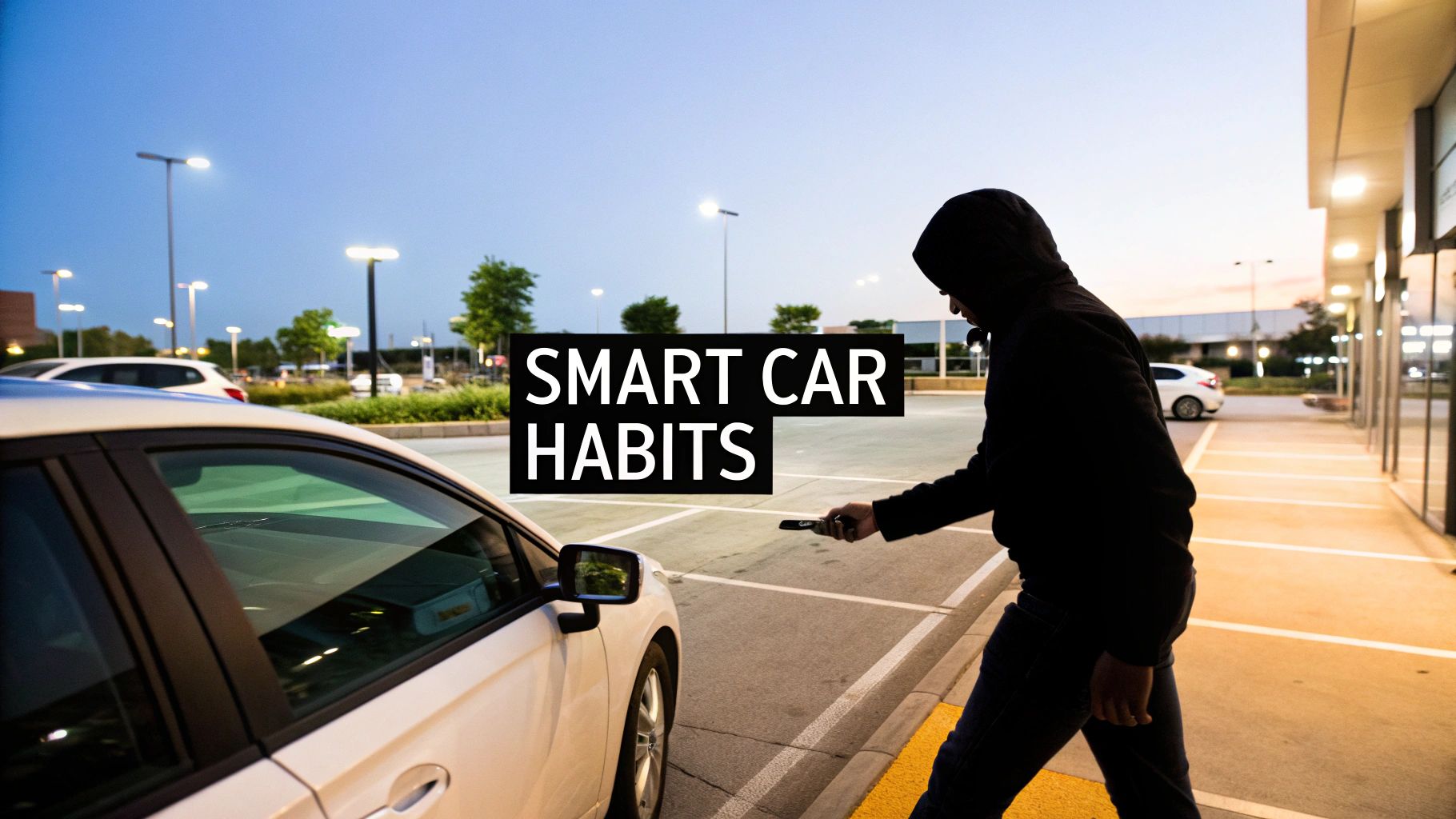
The most powerful tool in your security arsenal is your daily routine. Forget complex gadgets for a moment; a few small adjustments to how you leave your car can persuade a thief to walk right past it. Think of it as creating layers of hassle. Each layer makes stealing your car more time-consuming, noisy, and risky.
Sounds obvious, right? But always, always lock your doors and roll up your windows completely. Even a slightly cracked window is an open invitation for a thief to pop a lock. This isn't just for overnight parking—it applies even if you're just running into the store for two minutes.
"Most car thieves are looking for a quick and easy target. Seeing a robust lock signals that your car will require extra time, noise, and effort, making them likely to just move on to the next one."
This mindset extends to your keys. Never leave your car running unattended. It's one of the easiest ways for a thief to just hop in and drive off. The same goes for leaving keys in the ignition or anywhere else inside the vehicle. For cars with modern keyless entry, thieves can use signal-copying devices to steal your car from your driveway. A simple fix is a signal-blocking container, and a quality Faraday box for your car keys will stop them from capturing your key's signal.
The habits below are your foundation. They take seconds to perform but can make all the difference.
Immediate Actions to Secure Your Vehicle
This table breaks down the most impactful, no-cost habits you can start today.
| Habit | Why It Works | Real-World Impact |
|---|---|---|
| Lock Doors & Close Windows | Eliminates the single easiest point of entry for opportunistic thieves. | A thief is more likely to test the door handle of the next car than to risk breaking a window and attracting attention. |
| Take Your Keys | Prevents "hop-in" thefts, where a thief simply drives away in your running car. | An unattended, running car is the lowest-hanging fruit. Removing the key removes the opportunity entirely. |
| Secure Keyless Fobs | Blocks signal-relay attacks that allow thieves to clone your key's signal remotely. | Thieves can't unlock and start your car from the street if your fob's signal is contained in a Faraday box. |
| Hide All Valuables | Removes the visual temptation for a "smash-and-grab" break-in. | A thief who sees an empty car interior is less likely to risk a break-in for an unknown reward. |
Mastering these basics hardens your vehicle against the most common and preventable types of theft.
The Psychology of Parking
Where you park is just as important as how you lock up. A car tucked away in a dark, isolated corner is a thief's dream—it gives them privacy to work without being seen.
You can easily flip the script by always choosing parking spots that are:
- Well-lit: Bright lights are a natural deterrent. Criminals hate the spotlight.
- High-traffic: Parking where people are constantly walking or driving by increases the odds of a thief being noticed.
- Visible: Pick spots that are in the line of sight of security cameras, nearby storefronts, or apartment windows.
Hiding Valuables and Spare Keys
Never leave anything valuable in plain sight. A laptop bag on the seat, a GPS mount on the windshield, or even loose change in the console can be enough to trigger a break-in.
If you have to leave items in your car, put them in the trunk before you get to your destination. Why? Thieves often watch parking lots. If they see you move a valuable bag from your seat to the trunk, they now know exactly where to look.
And please, ditch the old trick of hiding a spare key under the bumper or in a magnetic box. Every criminal knows to check there. Give a spare to a trusted friend or family member instead.
The good news is that these smart habits are working. Vehicle theft has seen a nationwide decline after a recent surge. These numbers show that sustained efforts from law enforcement and car owners like you are genuinely making a difference.
Using Physical Devices to Deter Opportunistic Thieves
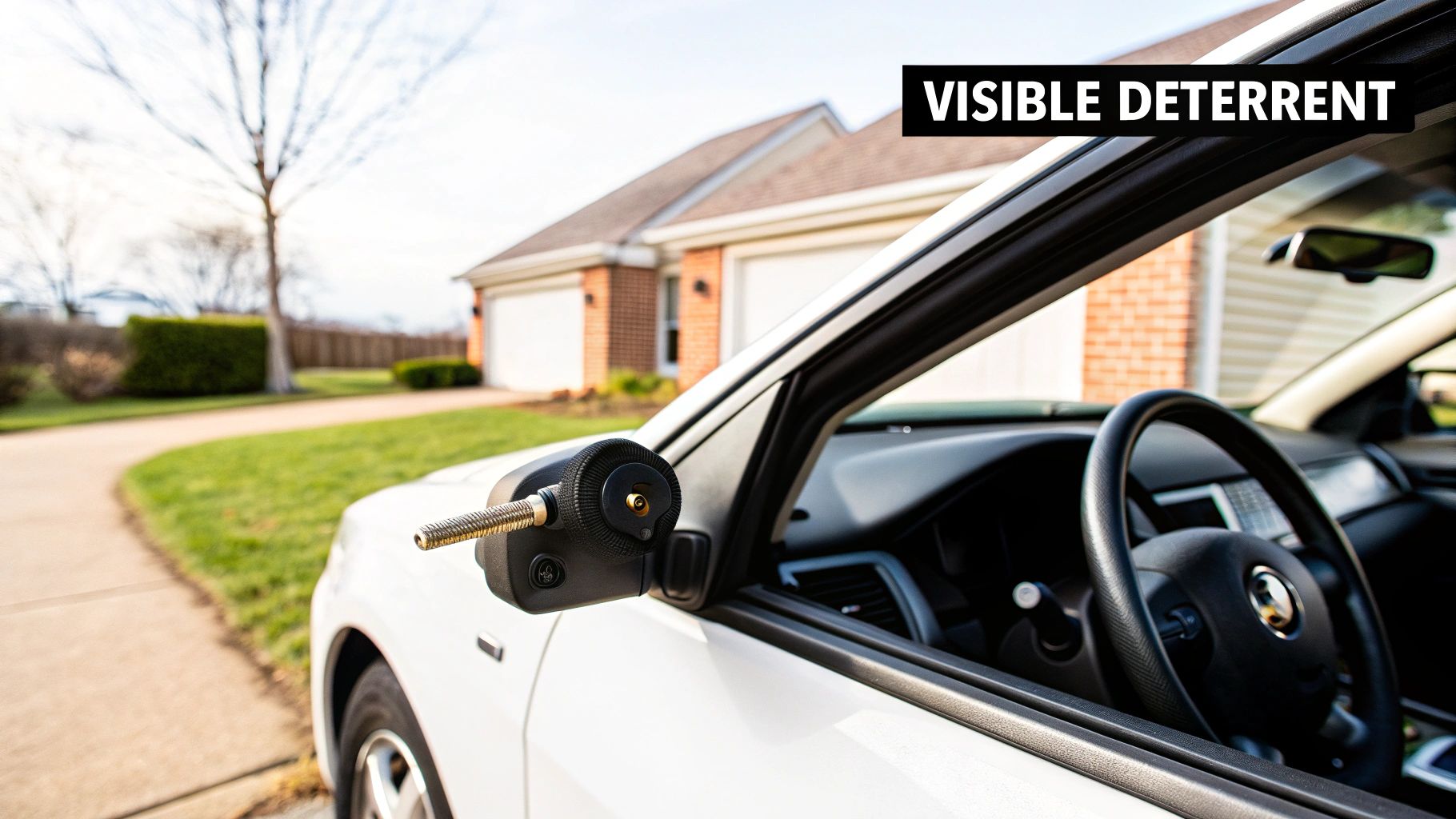
While smart habits are your foundation, a visible physical deterrent is a powerful statement. It tells a potential thief that your car will be a difficult, noisy, and time-consuming target. These devices add a crucial layer of mechanical resistance that electronic systems alone just can't provide.
Think of it from a thief’s perspective. They want the path of least resistance. A car with a bright yellow steering wheel lock is an immediate red flag, signaling that there are easier targets just a few feet away.
The Classics Still Work
Simple, time-tested tools are still incredibly effective at turning away opportunistic criminals. They’re straightforward, affordable, and most importantly, highly visible.
-
Steering Wheel Locks: This is the most recognizable anti-theft device for a reason. Modern designs, like "bar" style locks that hook onto the brake pedal or the classic "club" style, physically stop the wheel from turning. Their visual presence alone is a massive deterrent.
-
Brake or Clutch Locks: These devices lock your brake or clutch pedal straight to the floor, making it impossible to drive the car. They are less common than wheel locks but offer a strong mechanical barrier that is tough for thieves to access and defeat quickly.
-
Tire Clamps: You've probably seen these used by parking enforcement, but a personal tire clamp or "boot" makes your car completely immobile. While it's a bit much for daily use, it's an excellent option for long-term parking, protecting a classic car in storage, or securing a trailer.
These devices prove that protecting your car doesn’t always require a complex solution. The goal is to make your car look like too much trouble.
A physical lock doesn't have to be unbreakable; it just has to be stronger and more inconvenient than the car parked next to yours. It’s about making your vehicle a less attractive option for a thief in a hurry.
Securing Against Modern Threats
As car technology has advanced, so have the methods thieves use. Relay attacks and key programming are now common threats, but specific physical devices can block these high-tech heists cold. This is where modern hardware meets old-school security principles.
One of the most vulnerable points in a modern car is its OBD2 (On-Board Diagnostics) port. Thieves can plug a device into this port and program a blank key fob in less than a minute, completely bypassing your car's factory security. A simple OBD2 port lock is a metal cover that blocks access, stopping this attack in its tracks.
On top of that, you need to guard against relay attacks, where criminals capture and amplify your key fob's signal. A Faraday bag or box is essential here. These signal-blocking pouches create an electronic dead zone around your key, preventing thieves from cloning its signal to unlock and start your car.
For a deeper dive, check out our complete guide on the best car theft prevention devices to find the right fit for your vehicle. By combining these physical tools, you create a robust, layered defense that protects against both brute force and digital intrusion.
Integrating Electronic Systems for Advanced Protection
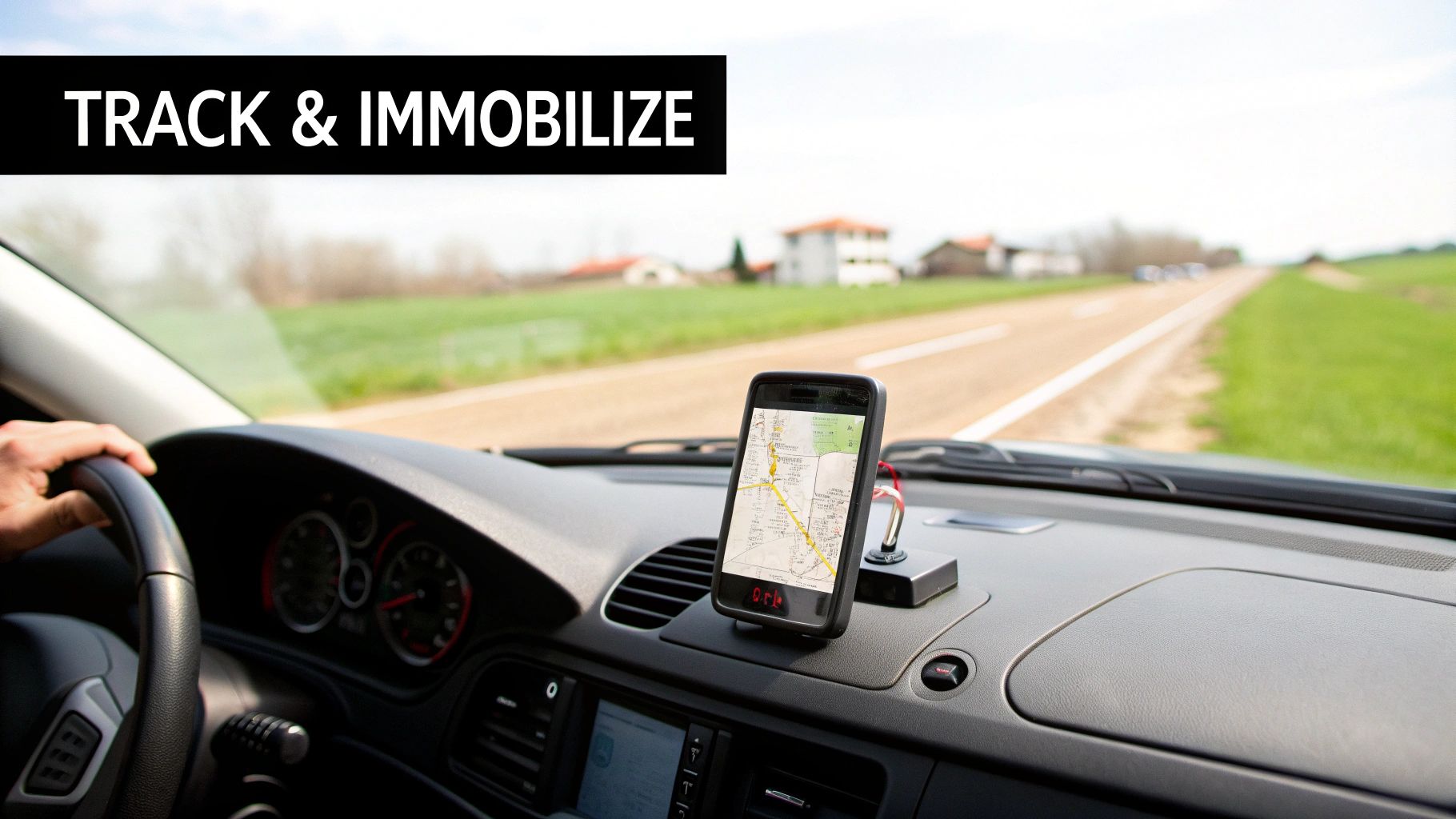
While a good steering wheel lock sends a clear visual message to would-be thieves, electronic systems are your active defense. They're the digital fortress working behind the scenes to stop a theft in its tracks or, if the worst happens, help you get your car back.
Moving beyond physical locks is a serious upgrade. Think of it as adding a high-tech nervous system to your car's security, from alarms that scream for attention to trackers that can pinpoint your vehicle's exact location. This is how you gain a real advantage over criminals.
Car Alarms: Factory vs. Aftermarket
Most new cars roll off the lot with a basic factory alarm. It’s a decent starting point, usually triggering if a door is forced open. But let’s be honest—they often lack the sophisticated sensors that can thwart a more determined thief.
This is where aftermarket alarms really shine. You can build a custom shield around your car with specialized sensors that factory systems just don't offer.
- Shock Sensors: These are your first line of defense against brute force. They detect sharp impacts, like a window being smashed or the car getting hit. Good ones are adjustable, so a passing truck doesn't trigger a false alarm.
- Motion Detectors: Absolutely essential for convertibles or if you ever leave your windows cracked. These sensors fill the cabin with an invisible field and trigger the alarm if any movement is detected inside.
- Tilt Sensors: Thieves are getting bold, sometimes trying to tow a vehicle or just steal expensive wheels. A tilt sensor knows the second your car’s angle changes and will blast the siren immediately.
Bolting on an aftermarket system with these features makes your car a much noisier, riskier target for thieves who depend on staying unnoticed.
The Power of Engine Immobilizers
Honestly, the engine immobilizer is one of the most effective anti-theft inventions ever. It's an electronic handshake between your key and your engine. Your key fob has a tiny transponder chip that sends a unique code to the car's computer. If the computer doesn't get that exact code, the engine simply refuses to start.
This technology single-handedly killed off traditional hot-wiring for most cars. While most vehicles built since the late 1990s have immobilizers from the factory, adding one to an older or classic car is a game-changing security upgrade.
An engine immobilizer is your car's silent guardian. It doesn’t make a sound, but it’s often the one thing that stops a thief from driving away, even if they manage to break in.
GPS Trackers: A Recovery Game-Changer
Let's say a thief bypasses everything and drives off. It’s a nightmare scenario, but a GPS tracker is your best shot at a happy ending. These little devices turn a potential total loss into a recovery mission.
Police departments will tell you firsthand: vehicles with trackers have a ridiculously high recovery rate, often within just a few hours of being reported stolen.
There are two main types, but only one you should consider for security:
- Passive Trackers: These just log location data that you have to download later. They're fine for tracking mileage, but useless for a live theft.
- Active Trackers: This is what you want. These systems transmit your car's location in real-time to an app on your phone. You can watch your car move on a map and feed that live data directly to the police.
Many tracking services also offer powerful features like geofencing (which alerts you if your car leaves a designated area, like your driveway) and even remote engine disabling. Yes, there's usually a monthly subscription fee, but it’s a tiny price to pay compared to your insurance deductible or the cost of a new car. A GPS tracker is a smart investment in your peace of mind.
Know Your Car's Weak Spots
Let's be honest: not all cars are equal targets for thieves. While any car can be stolen, some are practically magnets for criminals because of known, easy-to-exploit weaknesses. Getting real about your specific car’s risk profile is the first step to building a security strategy that actually works.
Once you know why your car is a target, you can stop wasting time on generic advice and focus on what will truly make a difference. The security needs of a classic muscle car are worlds apart from a modern SUV with keyless entry. It’s all about making smart, informed choices for your particular ride.
High-Risk Models and Their Glaring Vulnerabilities
There's a reason certain cars consistently top the "most stolen" lists, and it usually comes down to missing security features from the factory. The Hyundai Elantra and Hyundai Sonata have become infamous examples. Their popularity with thieves skyrocketed due to a simple, devastating flaw: many model years were built without electronic engine immobilizers.
Criminals figured this out and developed a shockingly simple method to steal them in under a minute. Even with software patches now available, countless vulnerable cars are still on the road, making them low-hanging fruit. You can find more details on the most targeted vehicles from resources like AAA.com.
If you drive one of these high-risk models, the standard "lock your doors" advice just isn't going to cut it. You need to get serious about adding the security the factory left out.
A thief who knows your car model lacks an immobilizer sees it as an easy win. Your job is to add layers of security that directly counter that specific weakness, making your car the exception they don't want to deal with.
The Power of VIN Etching
One of the most effective and surprisingly cheap ways to deter professional thieves is VIN etching. This is a straightforward process where you permanently engrave your car's unique Vehicle Identification Number (VIN) onto all the glass—the windshield, side windows, and back window.
So, why does this work so well? Professional car theft is a business, and it's often about profit from parts. Thieves steal cars, take them to a chop shop, and sell the components. Etched windows completely wreck that business model. To sell your car's parts, they'd have to replace every single piece of glass, which is expensive and time-consuming. Suddenly, their profit margin is gone.
Many local police departments and auto clubs host low-cost VIN etching events, or you can grab a DIY kit for next to nothing. It’s a simple, one-time action that makes your car a permanent financial liability for organized theft rings.
For a deeper dive into protecting your car from modern digital threats, our guide on OBD2 port hacking prevention has some crucial tips.
Your Action Plan for a Stolen Vehicle Emergency
It’s a feeling no one wants to experience: that gut-sinking moment you realize your car is gone. Panic is a natural reaction, but what you do in those first critical hours can make all the difference in getting your vehicle back.
Having a clear plan ready to go is your best defense.
First Call: The Police
Don't hesitate for a second. Your very first call should be to 911. The sooner law enforcement gets your vehicle’s details, the faster they can get an alert out to officers on patrol. According to the National Insurance Crime Bureau (NICB), acting quickly is one of the biggest factors in successful vehicle recoveries.
Have This Information Ready
When you make the call, the dispatcher will need specific details to create an effective report. Being prepared will make the process much smoother. Try to have this information on hand:
- Your License Plate Number: This is the fastest way for officers to identify your car.
- The VIN (Vehicle Identification Number): This is the car's unique 17-digit fingerprint, essential for positive identification.
- Year, Make, Model, and Color: A clear, concise description.
- Last Known Location: Where did you park it and when did you last see it?
- Identifying Marks: Mention anything unique—a specific scratch, a bumper sticker, a dent, or any custom wheels. Every detail helps.
Once you file the report, make sure you get the police report number. You'll need it for your insurance company.
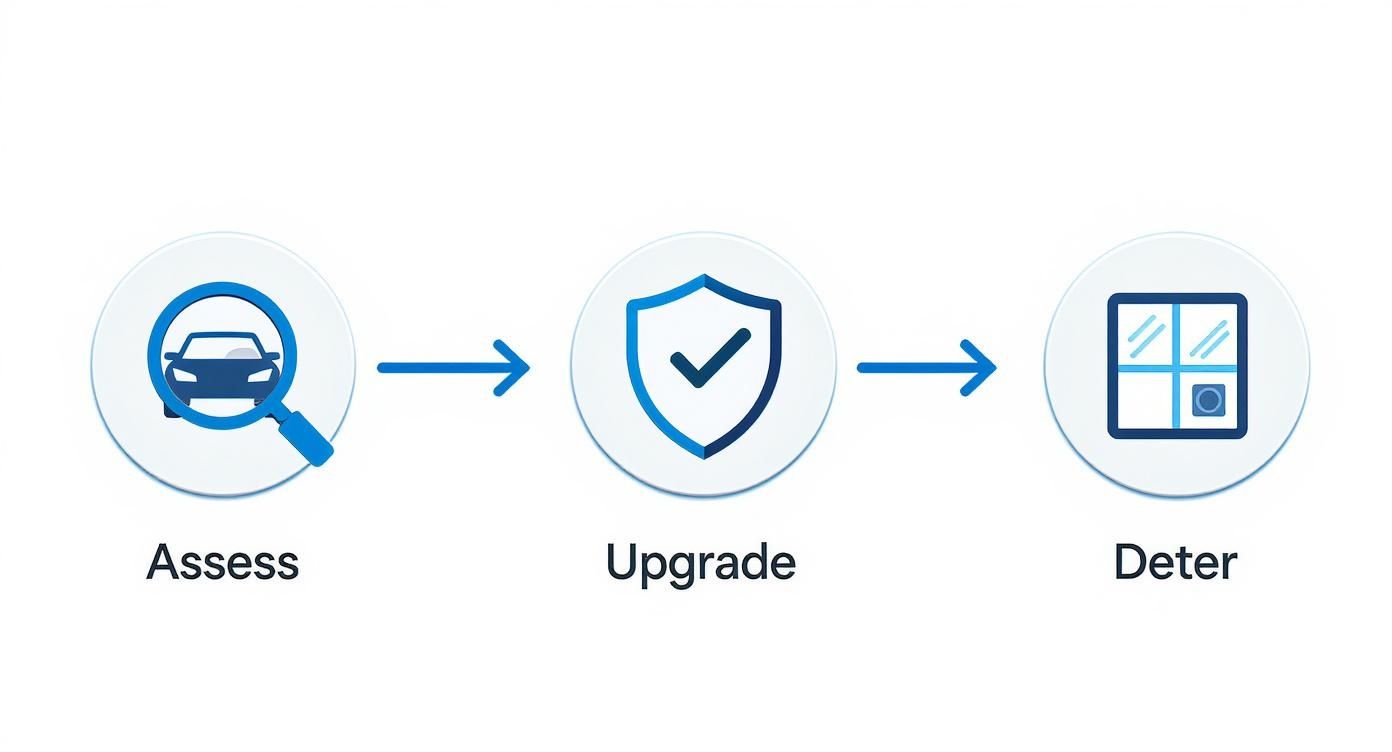
This simple visual breaks down the proactive mindset you should have before a theft ever occurs. Assess your risks, upgrade your security, and use visible deterrents to make your car a hard target.
Next Call: Your Insurance Company
As soon as you’re off the phone with the police, your next call is to your insurance provider. Reporting the theft immediately gets the claims process started. They will absolutely ask for the police report number, so keep it handy.
If you have a GPS tracking system installed, now is the time to use it. Log in, find your vehicle’s location, and relay that information directly to the police dispatcher. This live data is incredibly valuable and can lead to a very fast recovery.
Crucial Warning: Never try to recover a stolen vehicle on your own, even if your GPS tracker shows you exactly where it is. Car thieves are often involved in other dangerous crimes. Give the location data to law enforcement and let them handle the recovery. Your safety is paramount.
Common Questions on Protecting Your Car From Theft
When it comes to vehicle security, a lot of questions pop up. To help you sort through the noise and feel confident about your choices, we’ve tackled some of the most common ones with direct, no-nonsense answers.
Will a Steering Wheel Lock Actually Stop a Determined Thief?
Let's be real: a professional thief with the right tools and enough time can get past almost anything. But that’s not really the point of a steering wheel lock.
Its real job is to be an incredibly effective visual deterrent. The vast majority of car thieves are opportunists looking for a quick, easy, and quiet target. Seeing a big, brightly colored lock on your steering wheel is an immediate red flag for them. It signals extra effort, specialized tools, and a high chance of making noise. For the average car thief, that's more than enough reason to just move on to the next car. It’s a low-cost, high-impact layer of security that works simply by making your car a pain to steal.
Is a GPS Tracker Worth the Subscription Fee?
For many car owners, the answer is a resounding yes. A GPS tracker dramatically boosts the odds of getting your car back if it's stolen, often within just a few hours.
Think about it this way: compare the monthly subscription fee to your insurance deductible, the astronomical cost of replacing your car, and the loss of any personal items inside. Suddenly, the value becomes crystal clear.
A GPS tracker is one of the few tools that lets you actively fight back against theft. The peace of mind it offers, combined with the high probability of recovery, often makes the ongoing cost a worthwhile investment. It can turn a potential total loss into a recoverable inconvenience.
Can Thieves Really Copy My Key Fob Signal to Steal My Car?
Absolutely. It’s called a "relay attack," and it's one of the biggest threats facing modern cars with keyless entry. Thieves use a specialized device to pick up the signal from your key fob—even if it's sitting safely inside your house—and then "relay" it to another device held next to your car.
This trick fools your car into thinking the key is right there, allowing the thief to unlock the doors and start the engine in seconds. The single best defense is to store your key fob in a signal-blocking Faraday bag or box anytime it's not in use. It also helps to keep your keys away from your front door or windows, making it harder for thieves to intercept the signal from the street.
Does Basic Car Insurance Cover Theft?
This is a critical one: no. Standard liability insurance, which is the legal minimum in most places, does not cover theft.
To be protected if your car gets stolen, you need to have comprehensive coverage as part of your auto insurance policy. Comprehensive insurance is specifically designed to cover non-collision events, including:
- Theft and vandalism
- Fire or storm damage
- Falling objects
It is absolutely crucial to pull out your policy and confirm you have comprehensive coverage. If you don't, you'll be on the hook for the entire loss if your car disappears. Making sure you're properly insured is the final, vital piece of a solid security plan.
Protecting your vehicle requires a smart, layered approach, from daily habits to physical hardware. For advanced protection, consider securing your vehicle's most vulnerable digital access point. Cool Brand Designs offers robust solutions like the Car Anti-Theft OBDII Locking Device to stop high-tech thieves in their tracks. Explore our automotive security collection at https://www.coolbranddesigns.com and give your car the defense it deserves. For more daily security tips and product showcases, be sure to follow us on social media


