That gut-wrenching feeling of seeing an empty parking spot where your car should be? It’s something no one should ever have to experience. Car theft has moved on from simple hot-wiring to high-tech relay attacks, and unfortunately, the factory-installed security in most cars just isn't enough anymore. This guide is here to cut through the noise and show you which car theft prevention devices actually work and how to build a layered defense to keep your vehicle safe.
Want to see these devices in action? Follow us on Instagram and TikTok for live demos and security tips!
Why Modern Vehicle Security Is So Important
The days of just locking your doors and relying on a standard car alarm are long gone. Today's car thieves are smarter, more organized, and armed with technology that can bypass factory security in seconds. This means we, as car owners, have to be more proactive and think in terms of a multi-layered security strategy.
This isn't just about the hassle of losing your car; it's about protecting one of your most valuable assets. Criminals have shifted their tactics from brute force to electronic exploits. They can clone your key fob's signal from across a parking lot or hack directly into your car's computer, making many built-in systems almost useless. A modern defense combines visible deterrents that make a thief think twice, electronic shields to block their digital attacks, and tracking systems to get your car back if the worst happens.
The Growing Threat of Sophisticated Theft
You don't have to take our word for it—the market itself shows how serious this problem has become. The global demand for advanced car theft prevention devices is climbing fast as people scramble for better solutions.
The vehicle anti-theft system market size hit USD 15.7 billion in 2024 and is projected to grow at a CAGR of 8.1% through 2034. This trend isn't just about more car alarms; it's a clear shift toward intelligent systems with GPS tracking and remote immobilization. You can read the full report on these market trends to understand the rising demand.
This data tells a simple story: car owners are actively seeking better ways to protect their vehicles.
Building a Stronger Defense
A truly effective security plan uses multiple layers that work together. Think of it like securing your home—you wouldn't rely on just the lock on your front door. For your car, this means combining different types of devices to stop thieves at every turn.
- Visible Deterrents: This is your first line of defense. Things like a big, yellow steering wheel lock or a blinking LED light send a clear message: "This car is a hassle. Move on."
- Electronic Safeguards: This next layer includes things like engine immobilizers and advanced alarms that stop a thief from starting the car or block their hacking tools.
- Recovery Systems: If a determined thief gets past your first two layers, a GPS tracker is your best shot at getting your car back. It gives you and the police a fighting chance.
One of the most exploited weak points in modern cars is the onboard diagnostic port. Thieves can plug right into it to reprogram a new key or shut down your security systems entirely. If you're curious about this specific threat, check out our guide on how security locks stop vehicle theft by protecting that critical port. By understanding these modern risks and layering up your defenses, you can dramatically lower your chances of becoming another statistic.
Physical Deterrents: Your First Line of Defense
When it comes to stopping car thieves in their tracks, sometimes the simplest solutions are the most effective. Visible locks are like a big, bright "Go Away" sign for criminals. They're not just pieces of metal; they're a psychological tool that makes a would-be thief pause and look for an easier target.
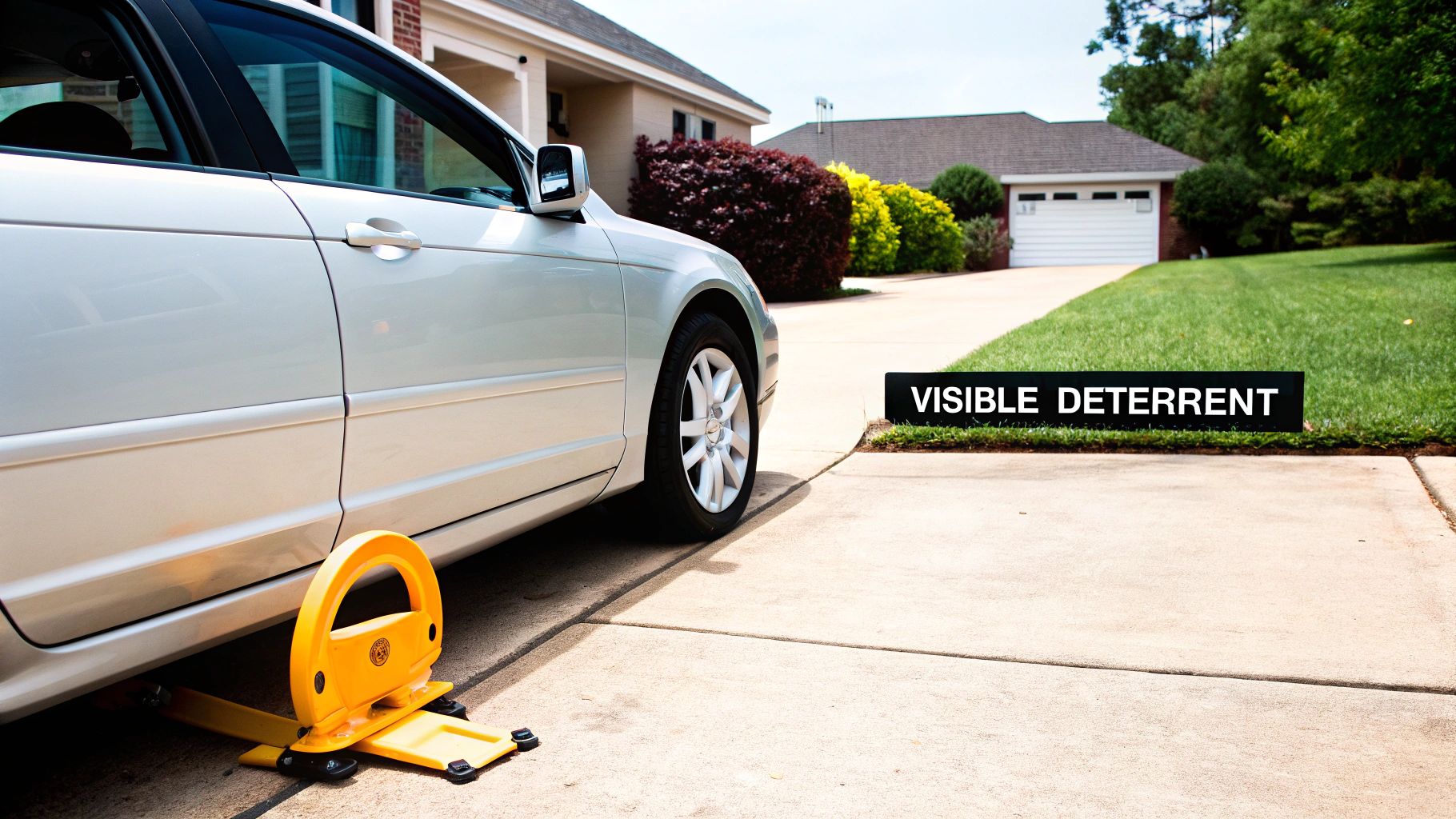
Think of a massive steering wheel lock as the modern-day equivalent of a castle gate. It sends an unmistakable message: "This car is not worth the hassle." Add in other layers like pedal jacks or wheel clamps, and you create so much friction that most thieves won't even bother.
Steering Wheel Locks
A classic for a reason, steering wheel locks like The Club wrap right around your wheel, making it impossible to turn. This simple device essentially puts your steering column in a cage.
- Durability: They're built from hardened steel designed to resist cutting.
- Visibility: The bright colors aren't just for show—they're a clear visual warning.
- Ease of Use: Most clamp on in less than 10 seconds.
A visible steering lock can slash theft attempts by up to 50%, according to industry surveys. It's a small step that makes a huge difference.
Pedal Jacks and Wheel Clamps
Pedal jacks are clever devices that wedge under your brake or clutch, completely disabling them. It’s like putting a chain through the spokes of a bicycle wheel—the car simply can’t be driven.
Wheel clamps, the big yellow "boots" you sometimes see, lock around a tire and freeze the car in place. Thieves hate them because getting one off is a noisy, time-consuming nightmare they want no part of.
- Blocked pedals completely foil a quick getaway.
- Tire clamps create a massive, bulky obstacle.
- Both are portable and can be used for daily parking.
- Cost-effective options start at just $20.
- They’re compatible with most cars and SUVs.
The more time a thief has to spend trying to steal your car, the more likely they are to just give up and move on. Every lock you add is another barrier they have to overcome.
| Device Type | Best Use | Setup Time |
|---|---|---|
| Pedal Jack | Short stops | 5 seconds |
| Wheel Clamp | Long-term storage | 30 seconds |
OBD-II Port Locks
Here's where we get a bit more modern. Today's car thieves are often hackers who plug into your car's OBD-II port to reprogram keys and bypass security systems electronically. An OBD-II port lock puts a physical deadbolt on that digital gateway.
Installation is a breeze—it takes less than a minute with no tools needed, and most cost under $30. It's a tiny investment that blocks an attack that could cost you thousands. For maximum protection, pair it with a Faraday pouch for your key fob to block signal-relaying attacks.
You might be interested in this: Learn more about OBD-II port locks on our product page for a secure, tamper-proof solution.
- Tamper Proof: Requires a unique key to unlock.
- Compact Design: Sits discreetly right under the dash.
- Universal Fit: Works on nearly every vehicle made after 1996.
Additional Best Practices
A great habit is to always snap a quick photo of how you've left your car locked up. This makes it easy to spot if a device has been tampered with or is missing.
- Give each device a quick inspection once a week.
- Store the key for your OBD lock separately from your car keys.
- Keep your locks clean to prevent rust and wear.
- Lubricate lock mechanisms monthly so they always work smoothly.
- Occasionally change where you place the deterrents to keep thieves guessing.
When to Use Each Tool
So, which lock is right for you? It really comes down to your daily routine and perceived risk. A simple pedal jack might only be $25, while a heavy-duty wheel clamp can run from $70 to $100.
- Daily Commute: A pedal jack is perfect for quick stops at the store or office.
- Overnight Parking: Add a steering wheel lock for that extra visual warning.
- Extended Storage: If the car is sitting for a while, go with a robust wheel clamp.
- High-Tech Theft Area: An OBD-II port lock is a must-have to prevent electronic hijacking.
It’s all about finding the right balance between cost, convenience, and security for your situation.
Upgrade Options
If you want to take things a step further, look for devices that merge mechanical locks with built-in alarms. These hybrid deterrents not only physically stop a thief but also blast a loud siren and flash bright LEDs if someone tries to mess with them.
- Sound Alert: The siren activates with any vibration or tampering.
- LED Indicator: A blinking light adds another layer of deterrence.
- Integrated Design: It’s a single piece, making for a quick and easy install.
- DIY Friendly Design: Most can be fitted with minimal tools.
Concluding Thoughts
By combining these physical deterrents, you're not just adding one lock—you're building a layered wall that thieves will struggle to scale. That means fewer break-ins and a whole lot more peace of mind.
Each one of these tools makes a clear, visible statement: "This car is protected." When you pair them with smart security habits, you create a defense that’s truly tough to beat.
How Electronic Immobilizers and Alarms Work
Forget the clunky physical locks for a moment. The real frontline of modern car security is the invisible electronic fortress guarding your vehicle. These aren't your dad's old, screeching car alarms; today's systems are sophisticated digital defenses designed to stop a theft cold before the engine even has a chance to turn over.
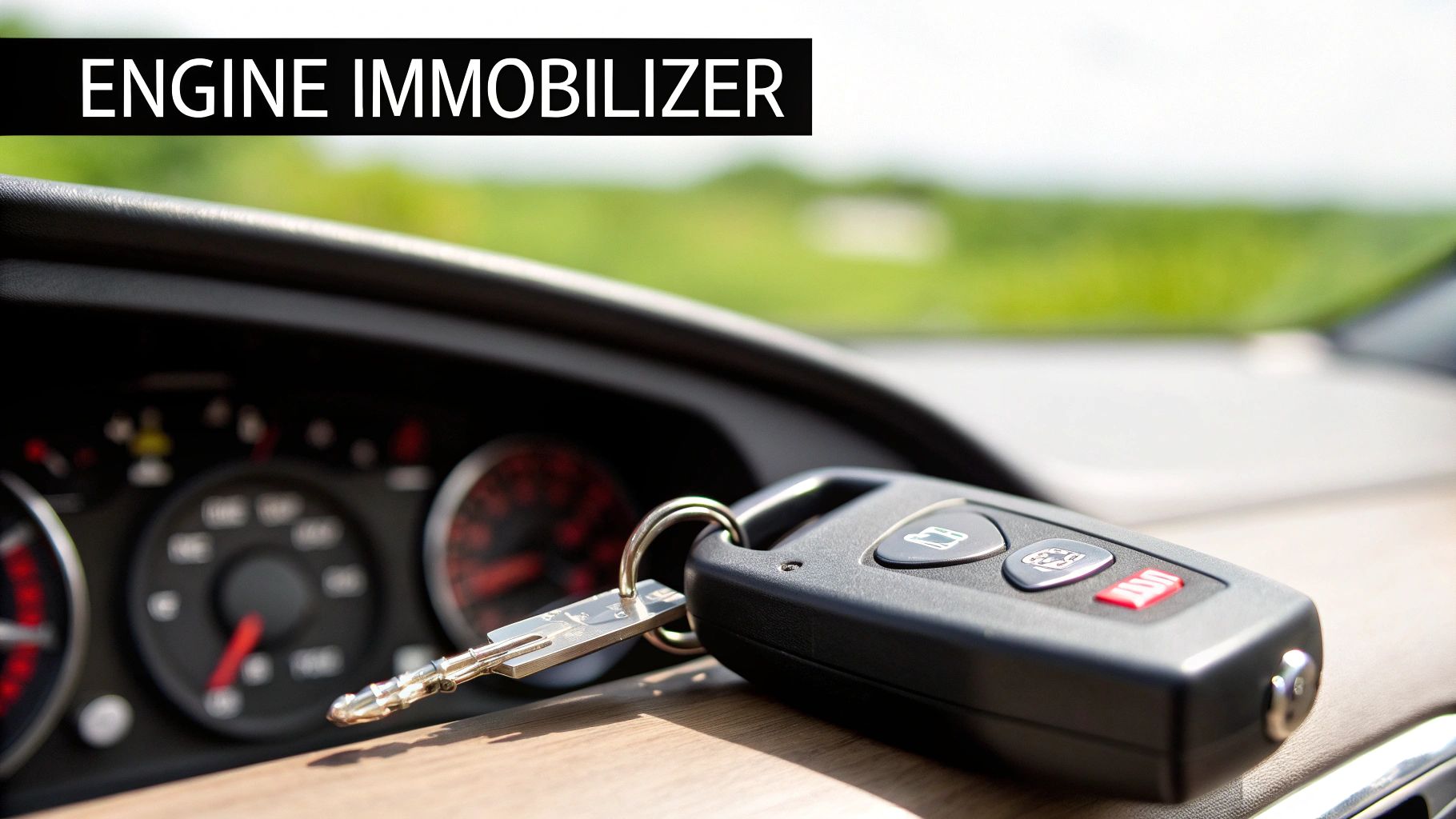
Think of an engine immobilizer as a secret digital handshake between your key fob and your car's brain. When you turn the key or push the "start" button, a tiny transponder chip in your fob sends a unique, encrypted code to the engine control unit (ECU). If the codes match, the handshake is a success, and the car starts. But if a thief tries to jam a fake key in or hot-wire the ignition, the ECU gets the wrong code—or no code at all—and it keeps the fuel system and ignition completely locked down. It’s this simple yet brilliant tech that has made hot-wiring a thing of the past for most modern cars.
Beyond the Siren: Modern Car Alarms
Today’s car alarms are far more than just annoying noisemakers. They’re intricate sensor networks that create a protective bubble around your vehicle, ready to detect a wide range of threats. The old-school door-trigger sensor is still there, but it's now joined by a whole team of high-tech monitors.
These advanced sensors are looking for things like:
- Impact and Shock: A sharp rap on the window or a forceful bump will trigger a shock sensor.
- Tilt and Inclination: Is someone trying to tow your car away or jack it up to steal the wheels? A tilt sensor will know immediately.
- Interior Movement: If a window is smashed and a hand reaches inside, motion sensors pick up the movement and sound the alarm.
- Proximity Alerts: Some aftermarket systems even have proximity sensors that let out a warning chirp if someone lingers too close to your car for too long, often scaring them off before they even try anything.
The Threat of Key Fob Cloning
As car security went digital, so did the thieves. The most prevalent high-tech threat right now is key fob cloning, often called a "relay attack." Criminals use a special amplifier device to capture the signal from your key fob—even when it's sitting safely inside your house—and relay it to a second device held by an accomplice next to your car. This fools your vehicle into thinking the real key is right there, letting the thieves unlock the doors, start the engine, and drive away in seconds.
This digital cat-and-mouse game is why the global market for vehicle anti-theft systems is exploding. Valued at roughly USD 12.4 billion in 2025, it's projected to rocket to USD 21.6 billion by 2035, with immobilizers leading the pack. You can find more insights on this trend over at Fact.MR.
The trend is undeniable: as thieves get smarter, the technology to stop them has to get even smarter.
How to Fight Back with Stronger Encryption
The good news? You're not defenseless against these high-tech attacks. While factory-installed systems offer a solid baseline, the aftermarket is where you'll find the heavy-duty solutions designed to shut down modern theft techniques.
Here’s how you can beef up your electronic defenses:
- Use a Faraday Pouch: This is the easiest and cheapest win. A Faraday pouch is a signal-blocking bag for your key fob. When the key is inside, it creates an electronic shield that makes it impossible for thieves to capture and relay its signal.
- Install an Aftermarket Immobilizer: Many aftermarket immobilizers use advanced, rolling-code encryption that is far more difficult for thieves to crack or bypass than standard factory systems.
- Choose a System with Two-Way Communication: The best modern alarms send alerts directly to a special key fob or your smartphone the instant a sensor is tripped. You’ll know immediately if someone is messing with your vehicle, even if you’re too far away to hear the siren.
Understanding how these electronic systems work—and where their weak points are—lets you make smarter choices to protect your investment. A powerful electronic immobilizer and a multi-sensor alarm, when paired with a few solid physical deterrents, creates a layered defense that will make most thieves decide your car just isn't worth the trouble.
Using GPS Trackers to Recover Your Vehicle
So, a thief has smashed through a physical lock and somehow silenced your alarm. They think they’re in the clear. But the game isn't over yet. A Global Positioning System (GPS) tracker is your secret weapon—a silent guardian that can turn a total loss into a successful recovery.
Think of these devices as the ultimate safety net in a layered security plan. Instead of just trying to prevent the theft, they’re all about recovery. They give you and law enforcement a real-time map showing exactly where your vehicle is. It’s like having a hidden homing beacon on your car, just waiting to be activated.
How Tracking and Recovery Systems Pinpoint Your Car
At its core, a GPS tracker uses satellite signals to figure out its precise location anywhere on Earth. It then beams that information, usually over a cellular network, straight to an app on your phone or a web portal. It's basically "Find My iPhone," but for your much more expensive car.
You'll generally run into two types of systems:
- Real-Time GPS Trackers: These are the most common. They constantly update your vehicle's location, sometimes every few seconds, giving you a live, moving dot on a map for immediate tracking.
- Cellular-Based Systems: While most GPS trackers use cellular networks to send data, some simpler devices rely only on cell tower triangulation. It's a bit less precise but can be a more budget-friendly option.
Both technologies work toward the same goal: getting your car back. It's no surprise that the demand for these advanced car theft prevention devices is climbing as more owners look for proactive security solutions.
Key Features That Make a Difference
Modern GPS trackers do a lot more than just drop a pin on a map. They’re packed with powerful features designed to give you total control and awareness, even if you're hundreds of miles away. These tools aren't just for recovery; they give you proactive alerts, too.
The market for advanced car anti-theft devices was valued at USD 16.81 billion in 2024 and is projected to skyrocket to USD 43.79 billion by 2035. This incredible growth is fueled by the integration of IoT features like real-time tracking and remote engine shutdown.
Understanding these key features helps you pick the right system for your needs.
- Geofencing: This lets you draw a virtual boundary around a specific area, like your home or workplace. If your car leaves that zone without your permission, you get an instant alert on your phone.
- Remote Engine Shutdown: If you've confirmed your car is stolen, this feature allows you or law enforcement to safely disable the engine remotely. The thief isn't getting any farther.
- Speed Alerts: You can set a maximum speed limit, and the system will ping you if your car goes over it. This is a dead giveaway that something is wrong.
- Power Disconnect Alerts: If a thief finds the tracker and tries to disable it by cutting the power, the device's internal backup battery kicks in and immediately sends you a tamper alert.
Some trackers even play nice with other security gadgets. For instance, a quality dash cam can give you video evidence of the break-in, which is gold for police reports and insurance claims. You can learn more about our 1440p HD 360 Dual Camera Dash Cam to see how video proof completes a security setup.
Subscription Services vs. One-Time Purchases
When you're shopping for a GPS tracker, one of the biggest decisions is the payment model. Each has its pros and cons, and the right choice really comes down to your budget and what you expect from the service.
| Feature | Subscription-Based Trackers | One-Time Purchase Trackers |
|---|---|---|
| Upfront Cost | Lower initial price | Higher initial price |
| Ongoing Fees | Monthly or annual subscription | None (or a small SIM card fee) |
| Features | Often includes premium features, dedicated support, and recovery assistance | Usually offers basic tracking and geofencing |
| Data Plan | Included in the subscription | You may need to purchase and manage your own SIM card |
Subscription services usually give you a more hands-off, feature-packed experience. On the other hand, one-time purchase devices are great if you just want straightforward tracking without another monthly bill.
Ultimately, a GPS tracker dramatically boosts the odds of getting your stolen vehicle back, making it one of the most effective car theft prevention devices you can buy.
Choosing the Right Security for Your Car
Picking the right car theft prevention devices isn't about grabbing the most expensive gadget off the shelf. It’s about building a smart, layered defense that’s right for your car and your life. There's no one-size-fits-all answer.
The security you need for a brand-new sports car parked on a busy city street is worlds away from what's needed for an old commuter sedan tucked away in a locked garage. So, how do you figure out what's right for you? It starts with asking a few honest questions.
Assessing Your Vehicle's Risk Profile
Your first move is to get real about your car's vulnerability. Is it a model that thieves love? Where do you park it every night? Answering these questions helps you create a personalized game plan instead of just following generic advice.
Think about these three key factors:
- Vehicle Value and Desirability: High-end models, popular trucks, or cars with parts that are easy to sell are prime targets. Thieves have a "shopping list," and you need to know if your car is on it.
- Parking Location: This is a big one. A private, locked garage is low-risk. A shared apartment complex garage is medium-risk. And street parking, especially in a dense urban area, is high-risk. Simple as that.
- Local Theft Trends: A quick online search for car theft stats in your town can be a real eye-opener. If your make and model is a local favorite for thieves, it’s a clear signal to beef up your security.
This infographic breaks down how a GPS tracker fits into the picture, shifting your strategy from just prevention to active recovery if the worst happens.
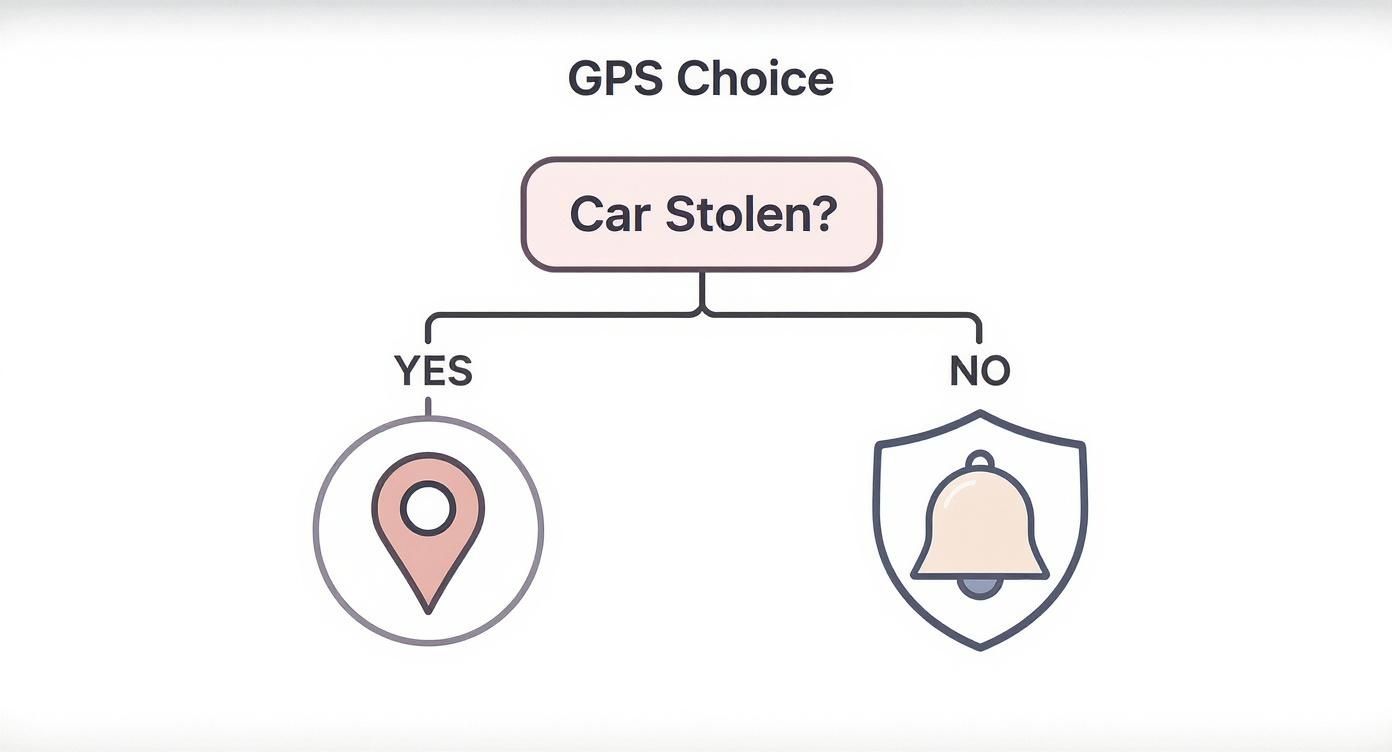 As you can see, a GPS tracker gives you an immediate alert and location data the second your car is stolen, giving you a fighting chance to get it back. Share this infographic on your social media to help your friends protect their cars too!
Tailoring Security to Your Risk Level
Once you have a handle on your risk profile, you can build a security system that actually makes sense. The best approach is always a layered one. The goal is to create multiple headaches for a potential thief, making them give up and move on.
A multi-layered security strategy—combining a visible deterrent, an electronic alarm, and a tracking system—can reduce your risk of theft by as much as 75%. It's about making your car a much harder and less appealing target.
Here’s what that looks like in the real world:
- Low-Risk Scenario: You have a daily driver that you park in a secure garage. A visible steering wheel lock and an OBD-II port lock are often enough to provide a solid, basic defense.
- Medium-Risk Scenario: Your car lives in a public lot or on a moderately busy street. Here, you'll want to step it up. Combine a physical lock with an advanced alarm system that pings your phone if something's wrong.
- High-Risk Scenario: If you have a high-value vehicle or have no choice but to park on the street in a high-theft area, you need to go all-in. Use a beefy wheel clamp, an aftermarket immobilizer, and a real-time GPS tracker.
DIY vs Professional Installation
The last piece of the puzzle is deciding who's going to install your new gear. This really comes down to the complexity of the device, how comfortable you are with tools, and your budget.
| Installation Method | Best For | Pros | Cons |
|---|---|---|---|
| DIY Installation | Simple physical locks, plug-and-play trackers, OBD-II locks. | No installation cost, you can do it on your own time. | Risk of doing it wrong, could potentially void a warranty. |
| Professional Help | Advanced alarms, hardwired GPS trackers, immobilizers. | Guarantees it's done right, often comes with a warranty. | Higher upfront cost, you have to schedule an appointment. |
By picking the right combination of devices and the right installation method, you create a formidable defense. You're no longer just hoping for the best—you're actively making your vehicle a tough nut to crack.
Even the best car theft prevention devices are useless if a simple mistake leaves your car wide open. Think of it this way: technology is only half the battle. The other half is you.
Developing smart, security-first habits is a free yet powerful layer of protection that no gadget can replace. These small tweaks to your daily routine can be the difference between a thief seeing your car as an easy score or a risky bet they're not willing to take.
The most basic habit is the one we all forget sometimes: always lock your doors and roll up your windows. It sounds almost silly to say, but you'd be shocked how many thefts are just crimes of opportunity. A thief testing door handles in a parking lot will always pick the unlocked car over one that requires any real effort.
Small Actions, Big Impact
Beyond just locking up, where you park makes a huge difference. Always aim for well-lit, high-traffic areas. Thieves love the dark and hate an audience, so parking under a streetlight or near a busy entrance is a natural deterrent. The more visible you are, the higher the risk for them.
Another critical habit? Keep a clean car interior. Never leave valuables like laptops, phones, wallets, or even a couple of shopping bags in plain sight. A visible bag is a flashing neon sign for a smash-and-grab, turning a quick errand into a broken window and a stolen purse.
A car with nothing visible inside is a complete mystery to a thief. They have no idea if breaking in is worth the risk. This simple act of tidiness strips away their incentive and encourages them to just move on.
Defending Against Digital Threats
Today, physical security has a digital counterpart. Modern keyless entry fobs are constantly broadcasting a signal that thieves can snatch out of the air, amplify with a relay device, and use to unlock and start your car. It's a high-tech threat that requires a low-tech solution.
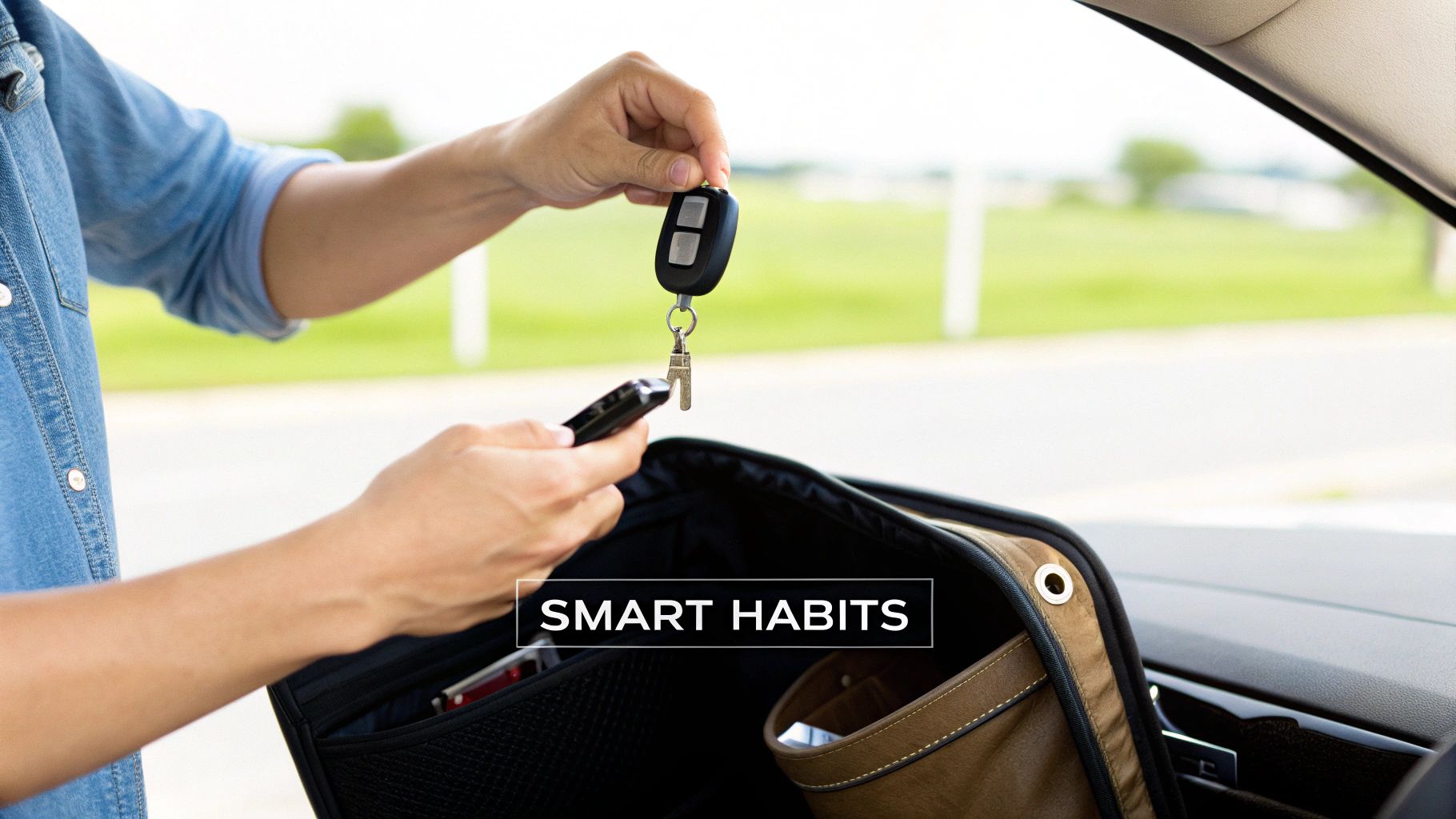
This is where a Faraday pouch becomes your best friend. Storing your key fob in one of these signal-blocking bags at home or in public makes it completely invisible to a thief's scanner.
Here are a few more powerful habits to work into your routine:
- Double-Check Your Locks: Most modern fobs let you lock your car from a distance. Get into the habit of hitting the lock button twice to hear the horn honk. That's your confirmation that the car is actually secure.
- Turn Your Wheels: When you park on a hill, turn your wheels toward the curb. It’s a simple move that makes it much harder for a thief to tow your vehicle away.
- Be Aware of Your Surroundings: Pay attention to who is around when you park your car. If a situation feels off, trust your gut and find another spot.
When you combine these habits with physical and electronic car theft prevention devices, you create a tough, multi-layered defense. You’re no longer a passive car owner; you're an active part of your vehicle's security, making it a much harder target for any criminal.
Frequently Asked Questions About Car Security
Diving into the world of car theft prevention devices naturally brings up a lot of questions. From warranty worries to cost-effectiveness, getting straight answers is the first step to making a smart decision. Let's tackle some of the most common questions to help you build a security strategy that actually works.
Do Aftermarket Devices Void My Car’s Warranty?
This is a huge concern for most car owners, and the short answer is generally no—but there's an important detail to remember. A simple, non-invasive device like a steering wheel lock or a plug-in OBD-II port lock will not touch your warranty. They don't change a thing about your car's factory systems.
The situation gets a bit more complex with devices that need to be wired into your car, like a hardwired GPS tracker or a new alarm system. If a device is installed incorrectly and causes damage to your car’s electrical system, the manufacturer probably won't cover those specific repairs. That's why it's crucial to always use a reputable, professional installer for any hardwired security gear.
Which Car Theft Prevention Devices Offer the Best Value?
"Best value" really depends on your specific situation and risk level. If you're in a relatively low-risk area, you can get an incredible return on investment with a high-quality steering wheel lock and an OBD-II port lock. For less than $100 combined, you get a solid visual deterrent and a powerful shield against electronic hacking.
But for a car parked on the street in a high-theft city, a GPS tracker offers unmatched value. A one-time cost or a small monthly fee is nothing compared to the $20,000+ headache of replacing a stolen vehicle.
Can Thieves Bypass Modern Security Systems?
The honest answer is yes. A determined, well-equipped thief can get past almost any single security measure. This is exactly why a layered security approach is so important. A thief might know how to pick a lock or clone a key fob, but each action takes time, makes noise, and increases their risk of getting caught.
The goal isn't to make your car an impenetrable fortress. It's to make it so annoying and time-consuming to steal that criminals give up and move on to an easier target. When you combine a visible lock, an electronic immobilizer, and a hidden GPS tracker, you're creating multiple roadblocks that frustrate even the most skilled thieves.
- Layer 1 (Visible Deterrent): A bright yellow wheel clamp screams "too much work" from a distance.
- Layer 2 (Electronic Security): An aftermarket alarm with a tilt sensor will go off the second they try to tow it.
- Layer 3 (Recovery System): If they somehow get past the first two layers, a hidden GPS tracker leads you right to your car's location.
Each layer presents a completely different challenge, dramatically increasing the odds that the thief will just walk away.
Ready to add a critical layer of defense to your vehicle? At Cool Brand Designs, we offer practical and effective security solutions like the OBD-II Port Lock to protect your car from modern threats. Explore our automotive collection and secure your peace of mind today at https://www.coolbranddesigns.com. And don't forget to follow us on social media for more tips and product updates!
Article created using Outrank


