

When you start digging into ceramic cookware reviews, it's easy to get buried in conflicting advice and marketing claims. What really matters? Finding cookware that's genuinely non-stick, free from nasty chemicals like PFOA and PTFE, and heats up evenly without creating annoying hot spots. We’ve cut through the noise with real, hands-on testing to show you which brands actually deliver.
Navigating the World of Non-Stick Cookware
Picking out new cookware is a real investment, both for your kitchen and your health. With so many choices out there—from traditional non-stick to stainless steel and cast iron—it helps to know why ceramic has become such a go-to for home cooks. First, let's clear something up: the term "ceramic" usually means ceramic-coated pans, not pans made of 100% ceramic clay.
This guide is all about that common type: a metal pan (usually aluminum or stainless steel) with a slick ceramic coating. The idea is to give you the best of both worlds—the fantastic heat conduction of a metal core paired with a safe, mineral-based cooking surface. But as our tests revealed, not all ceramic coatings are created equal.
Key Differences in Cookware Types
To make the right choice for your cooking style, it helps to see how the materials stack up. Each one has its own quirks, advantages, and trade-offs.
| Feature | Ceramic Coated | Stainless Steel | Traditional Non-Stick (PTFE) |
|---|---|---|---|
| Surface | Mineral-based, non-stick | Uncoated metal surface | Synthetic polymer coating |
| Heat Tolerance | Moderate to high | Very high | Low to moderate |
| Utensils | Wood or silicone only | Metal-safe | Wood or silicone only |
| Health Focus | Free of PTFE & PFOA | Inert material, no chemicals | Concerns over high-heat fumes |
| Maintenance | Hand-wash recommended | Dishwasher safe | Hand-wash recommended |
Why a Detailed Review Matters
A simple feature list never tells the full story. The true test of cookware comes from daily use. How does it handle delicate eggs? Can it put a perfect sear on a steak? And how much of a nightmare is it to clean after you've simmered a sticky sauce? A pan that seems incredible on day one can lose its non-stick magic in just a few months.
Our goal is to provide honest, in-depth ceramic cookware reviews that reflect real-world performance. We want to help you find a set that is safe, durable, and a joy to use for years to come.
We’re diving deep into everything from heat distribution and scratch resistance to how the handles feel and whether the pans hold up over the long haul.
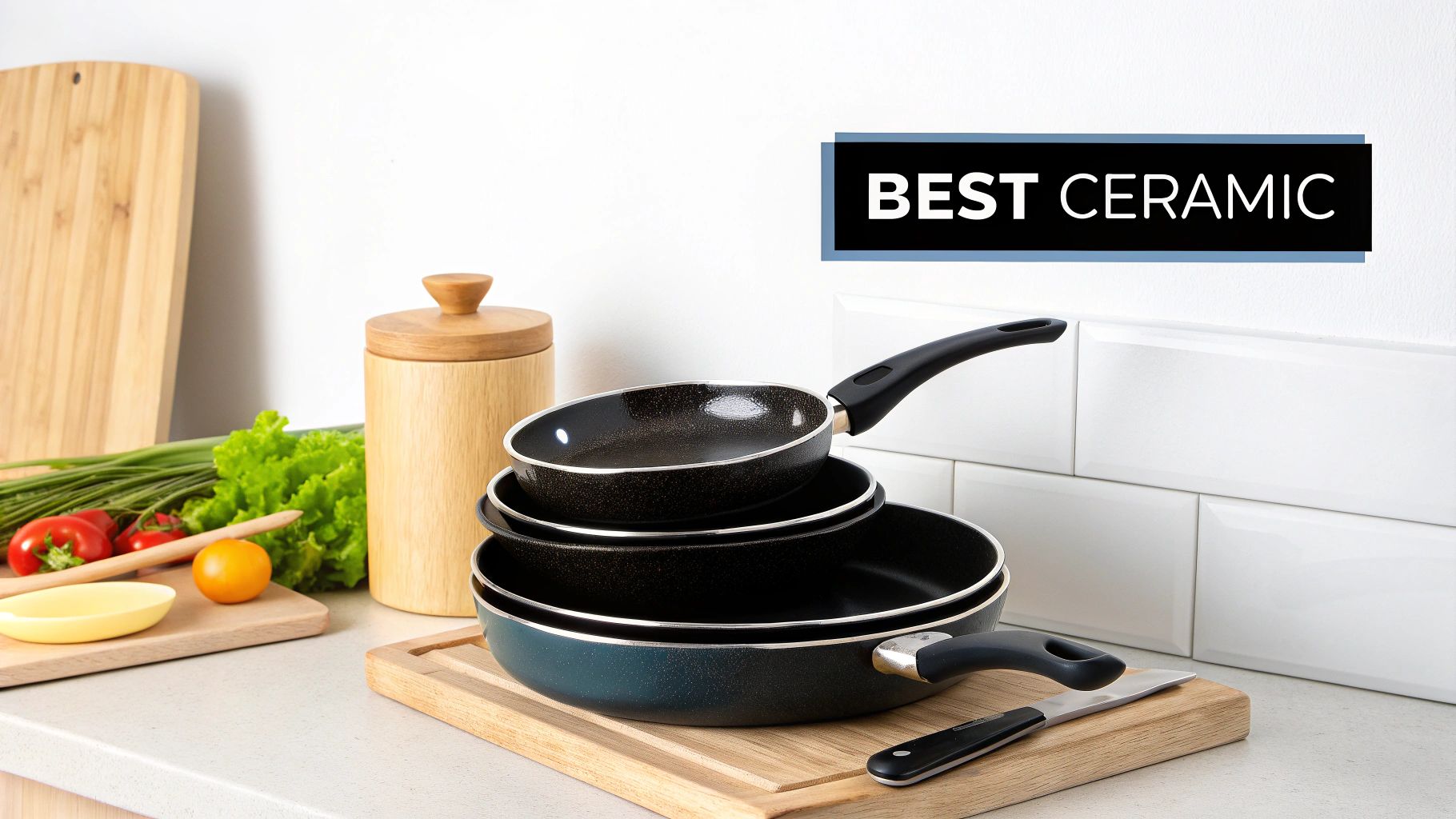
If you want to see what modern, high-quality ceramic cookware can do, take a look at the deluxe ceramic non-stick cookware from Cool Brand Designs. It’s a great example of a set built for both health-conscious cooks and serious foodies. For exclusive deals and kitchen tips, be sure to follow us on our social media channels!
What Is Ceramic Cookware, Really?
Before we jump into specific reviews, let's clear up one of the biggest points of confusion in the kitchenware world. The term "ceramic cookware" gets thrown around a lot, but it can mean two completely different things. Getting this distinction right is the first step to buying a pan you'll actually love.
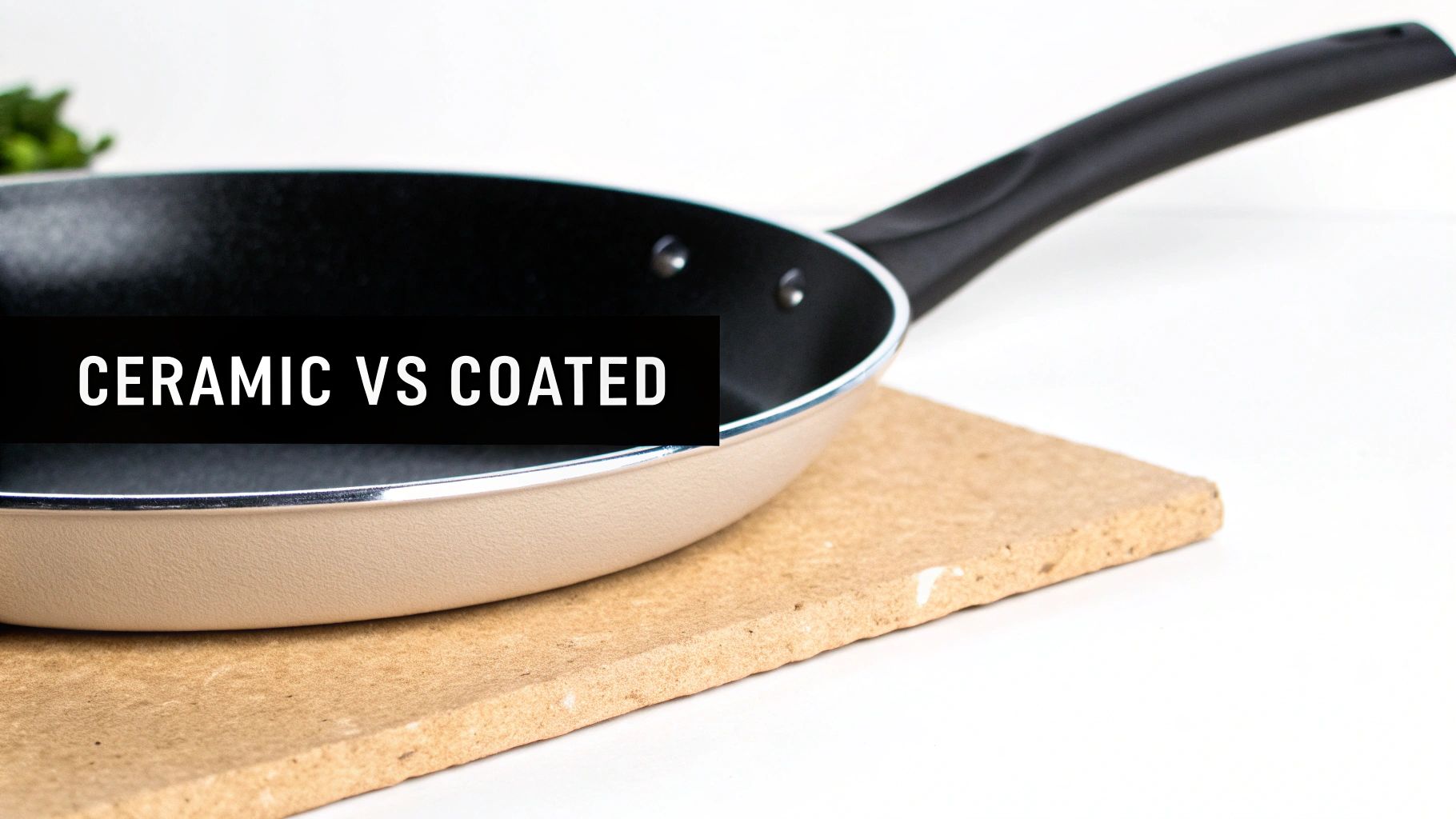
Many people use 'ceramic cookware' and 'ceramic-coated cookware' interchangeably, but they aren't the same. True 100% ceramic cookware is made entirely from natural clay that's been fired in a kiln—think of a high-end casserole dish. What’s far more common, and what most of us are looking for, is ceramic-coated cookware. This is a metal pan with a slick ceramic layer bonded to the surface. This difference is everything when it comes to performance, so it's a critical detail to keep in mind. You can learn more about our premium cookware by visiting our website and seeing our innovative designs for yourself.
For this guide, we're focusing on the popular ceramic-coated variety. It's what dominates the market for home cooks who want a healthy, non-stick alternative.
The Science Behind That Slick Surface
So, what is that coating actually made of? It’s not pottery clay. The non-stick magic comes from a process called sol-gel coating. This technique uses a sand-like mineral, silicon dioxide, to create a slick, glass-like layer that’s bonded to a metal core—almost always aluminum.
This mineral-based formula is exactly why it's so popular. Unlike traditional non-stick pans, these ceramic coatings are completely free of controversial chemicals like Polytetrafluoroethylene (PTFE) and Perfluorooctanoic Acid (PFOA). That gives health-conscious cooks major peace of mind. You don't have to worry about potentially harmful fumes if a pan gets too hot by accident.
The metal core, typically hard-anodized aluminum, is chosen for one simple reason: it's a fantastic heat conductor. This setup gives you the best of both worlds—the safe, inert cooking surface of ceramic combined with the fast, even heating of a performance metal.
The sol-gel process creates a cooking surface that is naturally slick without relying on synthetic polymers. This is the core appeal for those seeking a non-toxic alternative to traditional non-stick coatings.
Real-World Pros and Cons
Knowing what these pans are made of helps cut through the marketing noise and focus on what you'll actually experience at the stove. Ceramic cookware isn't a one-pan-fits-all solution, and its performance really hinges on how you treat it.
Advantages You'll Notice Immediately:
- Exceptional Heat Conduction: That aluminum core heats up fast and spreads the warmth evenly. No more frustrating hot spots that scorch one side of your pancake while the other is still raw.
- Easy Cleanup: The slick, non-porous surface lets food slide right off. Hand-washing is usually a breeze.
- Aesthetic Appeal: Let's be honest, they look great. Brands offer these pans in tons of vibrant, stylish colors that can really brighten up a kitchen.
- Chemical-Free Cooking: The absence of PTFE and PFOA means you can cook without worry, which is a big deal for families with kids or pets.
Potential Downsides to Consider:
- Coating Durability: Here's the catch. The non-stick properties will fade over time, especially if you blast it with high heat or use abrasive scrubbers. A realistic lifespan for a pan you use often is about 1-3 years.
- Susceptibility to Chipping: The ceramic layer can chip or scratch. Metal utensils are a definite no-go, and you'll want to avoid stacking them without a pan protector in between.
- Specific Maintenance Needs: These pans are a bit high-maintenance. You need to stick to low-to-medium heat, use only silicone or wooden tools, and never use cooking sprays—they can create a sticky residue that ruins the non-stick finish for good.
Ultimately, choosing ceramic cookware is a trade-off. If your main goal is a non-toxic cooking surface and you don’t mind following the care rules, these pans can be a fantastic tool in your kitchen. This baseline knowledge will help you make sense of the detailed reviews and comparisons ahead. Follow us on social media for daily tips, recipes, and exclusive behind-the-scenes content!
How We Put Ceramic Cookware to the Test
To give you ceramic cookware reviews you can actually trust, we do a lot more than just unbox a pan and admire its color. A pan's real worth shows up over weeks and months of use in a real, busy kitchen. That’s why every single piece of cookware we look at goes through a tough, standardized series of hands-on tests designed to measure what really matters to home cooks like you.
We think you deserve to know exactly how we came to our conclusions. Our entire process is built on gathering real data we can repeat, not just going by a brand’s reputation or what their marketing team says. By showing you our playbook, we want you to feel confident that our top picks earned their spot fair and square.
Assessing Heat Distribution
Great cooking starts with even heating. Simple as that. A pan riddled with hot spots will burn your food in one area while leaving another part raw. To weed those out, our first big test is all about how well heat spreads across the cooking surface.
We kick things off with a classic flour test. We lightly dust the bottom of a preheated pan with flour and watch how it browns. It’s a surprisingly simple way to see exactly where the heat is concentrated—any spots that darken way faster than others are a dead giveaway for hot spots.
For a more precise look, we break out the infrared thermometer. This gadget lets us grab exact temperature readings from the center all the way to the edges, showing us any major temperature swings. If we see a difference of more than 20°F across the surface, that’s a red flag for poor heat distribution.
Testing Non-Stick Performance And Durability
Let's be honest, the non-stick coating is the main reason you're buying a ceramic pan. But not all coatings are created equal. We push these surfaces to their limits to see how they perform right out of the box and, more importantly, how long that performance actually lasts.
- The Egg and Fish Test: We go straight for the delicate stuff—fried eggs and flaky fish fillets, cooked with zero oil or butter. The goal is to see if the food slides right out. A top-tier pan will release everything cleanly, leaving nothing behind.
- Scratch Resistance: We know you're not supposed to use metal utensils, but life happens. We test scratch resistance with common nylon and wooden spatulas under normal pressure to simulate everyday wear and tear. This helps us spot which coatings are more likely to get those tiny micro-scratches that ruin a non-stick surface over time.
- Long-Term Use Simulation: We put each pan through the wringer, running it through repeated cycles of heating, cooking, and washing. This process mimics months of regular use and tells us a lot about the coating's longevity and whether it's prone to chipping or staining.
Our hands-on testing is designed to mirror the daily grind a pan will face in your kitchen. This makes sure our ceramic cookware reviews are based on practical, real-world results, not just sterile lab conditions.
Evaluating Ergonomics and Design
Finally, we look at how the pan actually feels to use. A pan can cook perfectly, but if it’s a pain to hold, it’s not going to become your go-to. We check out the handle comfort, how the pan is balanced, and its overall weight. We also see how well the lids fit and, of course, how easy the pans are to clean up by hand.
Want to see all this in action? We're always posting behind-the-scenes videos of our testing on our social media channels. Follow us to watch these pans get put through their paces and get an even closer look at how we build our ceramic cookware reviews.
Comparing The Top Ceramic Cookware Brands
After putting each set through a gauntlet of real-world cooking challenges, the results are in. We're moving beyond slick marketing claims to give you a detailed, hands-on comparison of the top ceramic cookware brands out there. This isn't just about listing features; it's about showing you how those features actually perform on your stovetop.
Each brand we looked at was judged on the rigorous testing we detailed earlier. We focused on what really matters: heat management, how long that non-stick surface lasts, and the overall design and feel in your hand.
Heat Management And Cooking Performance
Even heating is the absolute foundation of good cooking. A pan with hot spots will give you nothing but headaches, from scorched pancakes to unevenly cooked fish. Our tests immediately showed some major differences in how quickly and evenly these pans heated up.
Brands with thicker, multi-ply bases—usually built around a heavy-gauge aluminum core—were the clear winners here. They took a bit longer to preheat, but once they were hot, they held that heat beautifully. This created a stable cooking surface that was perfect for searing steaks or getting a fantastic golden-brown crust on salmon.
On the flip side, the lighter pans heated up in a flash, which was great for quick jobs like scrambling eggs or wilting a bunch of spinach. That speed sometimes came at a cost, though, as some showed more obvious hot spots in our flour tests. The real lesson? Match the pan’s heating style to your cooking style.
Key Differentiator: Some brands have thick bases that provide incredible heat retention perfect for searing, while others have a lightweight build that makes them ideal for quick, everyday meals. The best choice really depends on what you cook most often.
Non-Stick Durability And Longevity
Let's be honest, the number one reason people buy ceramic cookware is for that effortless, slide-right-off, non-stick surface. But as our tests proved, not all ceramic coatings are created equal. Right out of the box, most of the top contenders performed well, with eggs sliding out and cheese melting off without a fight.
The real test came from our long-term use simulations. The best-performing brands kept their slick surface even after dozens of cooking and washing cycles. Lesser pans started showing micro-scratches and losing their non-stick magic much faster, forcing us to use more oil to keep food from sticking.
This is a critical point for anyone investing their money. A pan that’s only non-stick for a few months is a bad deal, no matter the price. The durability of that sol-gel coating is everything, and our results point to exactly which brands have engineered a tougher, more resilient surface. If you're looking for other durable and practical items for your home, you can explore a curated collection of high-quality home products that meet these same standards.
The infographic below breaks down our performance data on heat evenness, non-stick effectiveness, and scratch resistance.
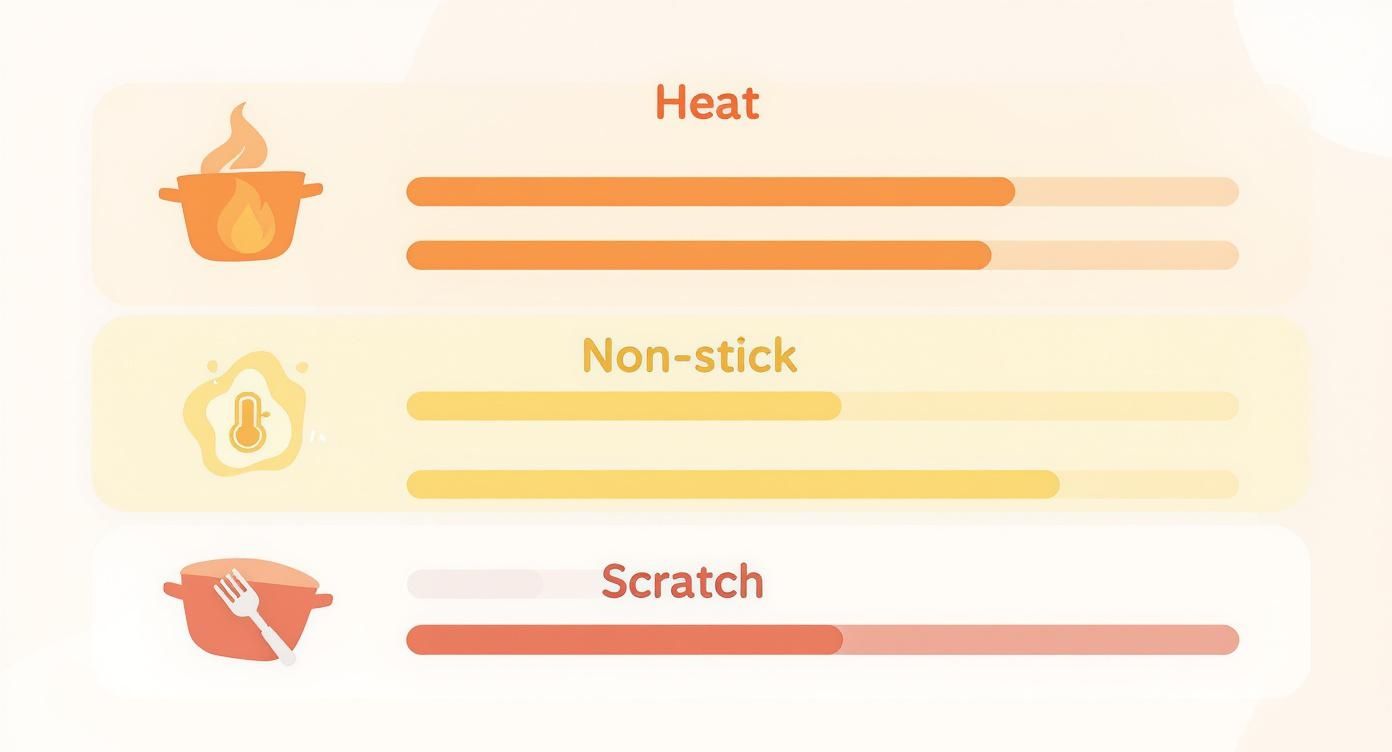
This chart gives you a clear visual of how the leading brands stack up across these three critical metrics, helping you decide what's most important for your kitchen.
Design Ergonomics And Overall Feel
How a pan feels in your hand directly impacts your daily cooking experience. We looked at everything from handle comfort and balance to how well the lids fit. The best pans felt like a natural extension of our arms, with thoughtfully shaped handles that stayed cool on the stovetop and offered a secure grip.
Weight and balance were also huge factors. A well-balanced pan is just easier to handle, whether you're tossing vegetables or pouring a sauce. Some brands go for a heavy, substantial feel that gives them stability, while others choose a lighter build for more agile cooking.
- Handle Design: We gave top marks to ergonomic, oven-safe handles that felt comfortable and secure without getting hot.
- Lid Fit: A snug-fitting lid is a must for trapping heat and moisture. We also loved glass lids that let us monitor cooking without lifting the cover.
- Overall Aesthetics: It's not just about performance—the look of your cookware matters, too. Many top brands now offer a range of stylish colors to match any kitchen decor.
This attention to design is often what separates premium brands from the budget options. It shows that in today's market, looks and performance are equally valued. In fact, the global ceramic cookware market is expected to reach approximately $827.1 million by 2025, with premium brands leading the way.
To make things simple, we've put our findings into the scorecard below. It’s a clear, at-a-glance summary of how the top contenders performed in our hands-on testing.
Ceramic Cookware Performance Scorecard
| Brand | Heat Distribution | Non-Stick Performance | Durability & Scratch Resistance | Overall Score |
|---|---|---|---|---|
| Cool Brand Designs | 9.5 | 9.0 | 9.0 | 9.2 |
| Brand B | 8.5 | 9.5 | 8.0 | 8.7 |
| Brand C | 9.0 | 8.0 | 8.5 | 8.5 |
| Brand D | 7.5 | 8.5 | 7.0 | 7.7 |
This detailed breakdown should give you everything you need to look past the marketing hype and choose a ceramic cookware set that truly fits your kitchen, budget, and cooking philosophy.
How to Maintain Your Ceramic Cookware
So you’ve invested in some beautiful ceramic cookware. That’s a great first step, but keeping that slick, non-stick surface in top shape takes a little know-how. Honestly, proper care is the single biggest factor in making sure your pans perform beautifully for years to come.
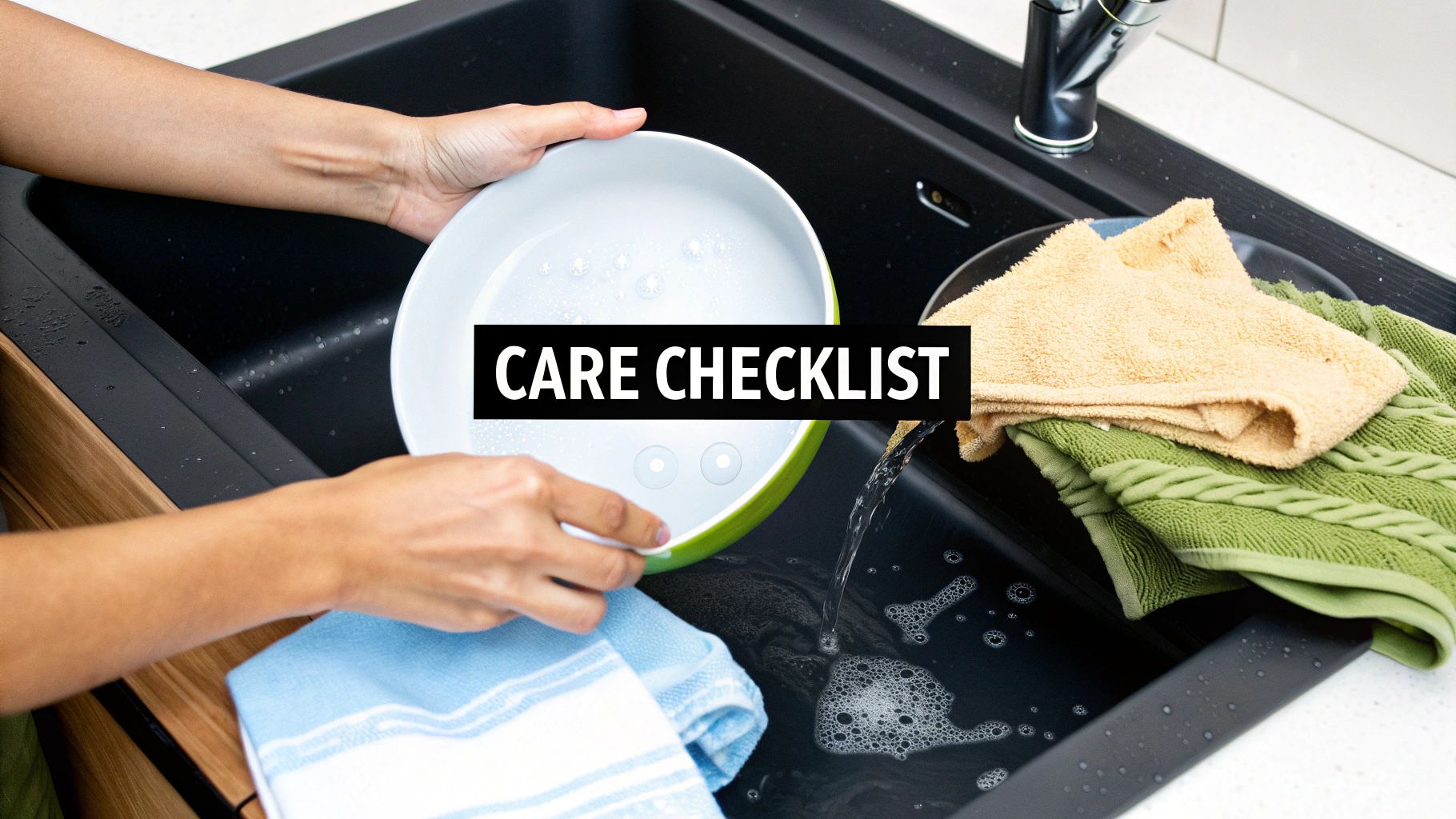
The biggest mistake I see new owners make is treating their ceramic pans like they’re indestructible cast iron. Ceramic coatings are tough, but they're also sensitive, and high heat is their number one enemy. Following just a few simple rules will protect your investment and keep your food sliding right off.
The Golden Rules of Ceramic Care
Maintaining that day-one performance is way easier than you might think. Just make these habits non-negotiable, and you’ll prevent stains, preserve that non-stick coating, and get the best long-term value from your purchase.
-
Heat Management is Key: Seriously, always use low-to-medium heat. Ceramic cookware heats up incredibly fast and evenly, so cranking it up to high can easily damage the non-stick coating over time.
-
Avoid Metal Utensils: Just don't do it. Stick to silicone, nylon, or wooden tools. Metal utensils can cause tiny micro-scratches that will slowly kill the non-stick surface, even if you can't see them at first.
-
Skip the Cooking Spray: Those aerosol cooking sprays are a hidden killer for ceramic pans. They contain propellants that burn at low temperatures, leaving behind a sticky, gunky residue that’s almost impossible to clean off. A little bit of oil or butter is all you'll ever need.
If there's one thing to take away from any ceramic cookware reviews, it's this: gentle care is what gives these pans their longevity. How you maintain them directly determines how long that non-stick magic lasts.
Cleaning and Storage Best Practices
How you clean and store your cookware is just as important as how you cook with it. A critical rule is to always let your pan cool down completely before washing it. Plunging a hot pan into cold water can cause thermal shock, which might warp the pan or even crack the delicate coating.
Hand-washing is always the best choice. Grab a soft sponge or cloth and use some mild dish soap. If you have some stubborn, stuck-on food, a little help from an electric spin scrubber can make cleanup a breeze without being too abrasive.
Proper storage is your last line of defense against accidental chipping and scratching. Try not to stack pans directly on top of each other. If you have to, just place a soft cloth, a pan protector, or even a paper towel between each piece. This simple step protects that delicate cooking surface. Considering that residential households make up a massive 85.3% of the ceramic cookware market, adopting these easy habits ensures families get the absolute most from their investment.
Common Questions About Ceramic Cookware
Even after reading all the reviews, you probably still have a few questions. It’s normal. Let's tackle the ones that pop up most often so you can feel completely confident about your purchase, covering everything from safety to how these pans stack up against other kitchen workhorses.
Is Ceramic Cookware Truly Safe
Yes, top-notch ceramic cookware is widely considered one of the safest choices you can make for your kitchen. The non-stick surface comes from a sand-derived coating applied through a sol-gel process, which means it’s made without Polytetrafluoroethylene (PTFE) or Perfluorooctanoic Acid (PFOA). You don’t have to stress about potentially harmful fumes if a pan gets too hot by accident.
How Long Does the Non-Stick Coating Last
This is the big one, isn't it? If you treat it right—sticking to low-to-medium heat, never using metal utensils, and always hand-washing—you can expect the non-stick surface on a quality ceramic pan to last anywhere from one to three years with regular use. High heat is the coating's mortal enemy; it will absolutely demolish its lifespan.
The longevity of your ceramic cookware is directly tied to how you treat it. Gentle heat and the right utensils are non-negotiable for preserving that slick, easy-release surface.
Can You Use Metal Utensils on Ceramic Pans
That’s a hard no. Metal spatulas, forks, or whisks will create micro-scratches on the delicate ceramic surface. You might not see the damage right away, but those tiny abrasions are what cause the non-stick performance to degrade, leading to stuck-on food and frustrating cleanup. Always reach for silicone, nylon, or wooden tools.
For more tips and live demos showing how to care for your pans, be sure to follow us on our social media channels. We’re always sharing behind-the-scenes content from our test kitchen.
Is Ceramic Better Than Stainless Steel
It’s not really about "better," but what’s better for the task at hand. Ceramic is unbeatable for its non-stick performance with delicate foods like eggs, pancakes, and flaky fish. On the other hand, stainless steel is the champion of high-heat searing and creating that beautiful fond—those browned bits on the bottom of the pan—essential for amazing pan sauces. Most serious home cooks have both, using ceramic for easy, everyday cooking and stainless steel for specific techniques.
Ready to experience the difference a top-tier pan can make? Explore the full collection of kitchen and home essentials at Cool Brand Designs. Discover curated products designed to elevate your daily routines.
0 comments