

If you think rest days are just about kicking back on the couch, you're missing a huge piece of the fitness puzzle. Real recovery isn’t passive—it’s an active strategy to rebuild muscle, dodge injuries, and smash your performance goals.
Think of your body as a high-performance engine. After a tough race, you wouldn’t just park it in the garage and hope for the best. You’d get in there and do the maintenance: change the oil, check the tires, and tune everything up so it’s ready to go again.
Why Your Recovery Plan Needs an Upgrade
Modern fitness demands that same level of care. Pushing your limits in the gym or on the track creates microscopic tears in your muscle fibers. That soreness you feel? That’s the evidence. The recovery period is when your body gets to work repairing that damage, building everything back stronger and more resilient than before.
Without a solid recovery strategy, you're just spinning your wheels, risking overtraining, frustrating plateaus, and nagging injuries that never seem to go away.
The Shift from Passive Rest to Active Recovery
The fitness world is finally moving beyond the old-school idea of "just rest." This shift is so significant that it's fueling a massive market for specialized recovery gear. The global fitness recovery services market was valued at USD 8,219.7 million in 2025 and is expected to explode to USD 24,528.9 million by 2035.
That incredible growth isn't just a trend; it's a fundamental change in how athletes at all levels—from weekend warriors to pros—think about post-workout care. You can discover more insights about this expanding market and see how consumer demand is shaping the future of fitness.
Active recovery is the difference between bouncing back and burning out. It’s about intentionally giving your body the resources it needs to adapt, repair, and come back even stronger.
This guide is your roadmap to building a smarter recovery routine. We’ll break down the essential tools that belong in every modern athlete's toolkit, including:
- Myofascial Release Tools: Think foam rollers and massage balls.
- Percussive Therapy Devices: Like those powerful massage guns you see everywhere.
- Compression Gear: Including boots, sleeves, and socks.
- Temperature Therapy: From ice-cold plunges to soothing heat packs.
Whether you’re training for a marathon or just trying to stay consistent with your gym sessions, understanding these tools will help you build a recovery plan that actually works. Share this guide with a friend who needs to upgrade their recovery game!
The Modern Athlete's Recovery Toolkit
Diving into workout recovery gear can feel a bit overwhelming at first. With so many gadgets all promising faster results, it’s tough to know where to start. But once you understand the main categories of the best workout recovery tools, it all starts to make sense. Each type works on a different principle to tackle muscle repair and beat fatigue from a unique angle.
Think of your muscles after a killer workout like a rope that’s been pulled tight, knotted up, and even a little frayed. The goal of recovery is to gently work out those knots and smooth out the fibers, making the rope strong and flexible again. Different tools are like different sets of hands, each with its own technique for getting the job done.
This diagram shows how active recovery isn't just a standalone activity—it's the bridge connecting injury prevention and strength building, creating the foundation for a truly resilient body.
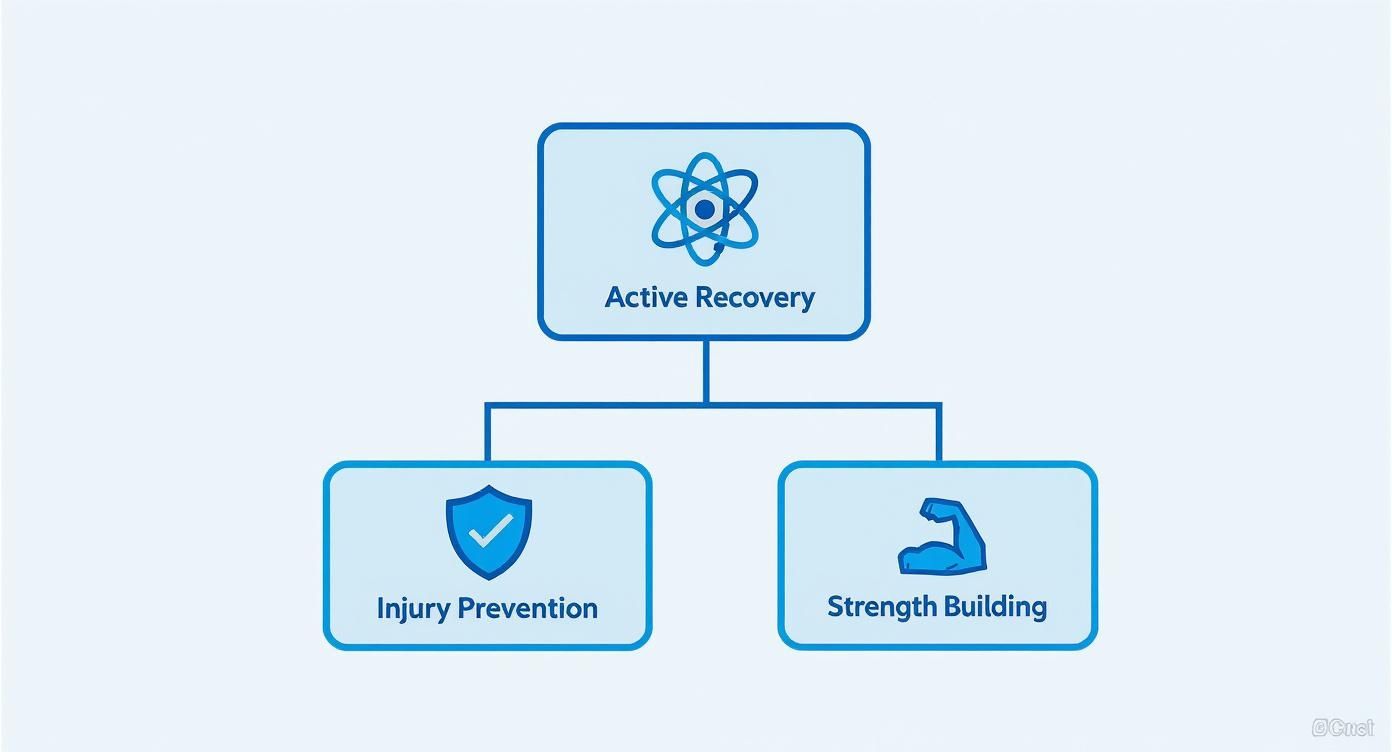
Ultimately, a smart recovery plan isn't just about feeling better tomorrow; it’s a proactive strategy that fuels long-term performance and keeps you in the game.
Percussive Therapy (Massage Guns)
Massage guns have absolutely exploded in popularity, and it's easy to see why. These handheld devices deliver percussive therapy—basically, super-fast, targeted pulses of pressure that get deep into your muscle tissue. This powerful action boosts blood flow, helps break up stubborn knots, and flushes out the lactic acid that leaves you feeling sore.
They’re especially great for hitting specific, tight spots that a foam roller just can't reach. Think of it as a targeted jackhammer for muscle tension, but in a good way. It’s perfect for waking up muscles before a workout or providing immediate relief afterward. Follow us on social media for tutorials on how to use a massage gun effectively!
Myofascial Release (Foam Rollers)
The classic foam roller is the original hero of myofascial release, a technique for soothing the fascia, which is the web of connective tissue surrounding all your muscles. When you roll over tight spots, you're applying sustained pressure that convinces that tissue to release tension, improving your flexibility and overall range of motion.
Foam rollers are versatile, affordable, and fantastic for covering large muscle groups like the quads, hamstrings, and back. It's no wonder they're one of the most common recovery tools you'll see in any gym.
Compression Therapy (Boots and Sleeves)
Compression tools, like inflatable boots and sleeves, use dynamic air pressure to give your limbs a thorough massage. They inflate and deflate in sequence, creating a pulsing sensation that mimics your body’s natural muscle pump.
This process is incredible for flushing out metabolic waste, taming swelling and inflammation, and giving your circulation a major boost. It’s like having a personal masseuse whose only job is to push out the old fluid and welcome in fresh, oxygen-rich blood.
This makes compression gear a game-changer for endurance athletes or anyone whose job keeps them on their feet all day.
Cryo and Thermotherapy (Cold and Heat)
Finally, don't underestimate the simple power of temperature. Cryotherapy (cold) constricts your blood vessels, which helps numb pain and shut down inflammation right after a brutal session. This is your classic ice bath or cold pack on a sore joint.
On the flip side, thermotherapy (heat) does the exact opposite. It opens up those blood vessels, increasing blood flow to relax stiff, tight muscles and soothe those aches that linger a day or two later. For a treatment that combines soothing vibration with warmth, our Luxury Massage Mat with Soothing Heat offers incredible full-body relaxation.
Choosing the Right Recovery Tools for Your Fitness Style
There’s no magic bullet when it comes to workout recovery. The "best" tool is simply the one that’s right for you. That high-powered massage gun your powerlifter friend swears by might be total overkill for your post-marathon soreness. Your body, your training, and your goals all dictate what’s going to work.
Think of it like choosing the right shoes for the job. You wouldn't wear hiking boots for a track meet or running shoes to hit a new squat PR. Your recovery tools deserve that same specific approach. When you match the tool to the unique demands you place on your body, you unlock faster and more meaningful results.
This isn't about checking boxes off a generic list; it's about building a personalized strategy. Let's break down a few common athlete profiles to see how you can tailor your recovery kit for maximum impact. What’s your go-to recovery tool? Let us know in the comments below!
For the Endurance Runner
Marathon runners, cyclists, and other endurance athletes subject their bodies to relentless, repetitive stress. The biggest hurdles are almost always lower-body fatigue, nagging inflammation, and muscle tightness that can snowball into bigger problems like shin splints or IT band syndrome.
The main mission here is to supercharge circulation and flush all that metabolic junk out of your overworked legs.
- Compression Boots: These are an absolute game-changer for runners. They systematically squeeze and release different sections of your legs, actively pushing out lactic acid and kicking swelling to the curb far more effectively than just putting your feet up.
- Foam Roller: A classic for a reason. It’s your go-to for ironing out the tightness in big muscle groups like your quads, hamstrings, and calves—all of which take a serious beating during those long miles.
- Cold Therapy: Nothing beats an ice bath or a targeted cold pack for calming down angry, inflamed joints after a run. It's perfect for zeroing in on hotspots around the knees and ankles.
For the Strength Athlete
Powerlifters, bodybuilders, and anyone chasing heavy lifts are creating intense, focused muscle damage. The recovery goal isn't just about feeling less sore; it's about getting deep into the muscle tissue, breaking up dense knots, and setting the stage for repair so those muscle fibers grow back stronger.
For strength athletes, recovery is all about preparing the muscle for the next heavy session. That means improving mobility and releasing that deep-seated tension that holds you back.
A lifter’s toolkit needs to be all about power and precision.
- High-Powered Massage Gun: This is the MVP for most strength athletes. A serious percussive massager can penetrate deep into dense muscles like the glutes, pecs, and traps, obliterating trigger points that a foam roller just can't reach.
- Stretching Aids: Don't sleep on the basics. Tools like resistance bands or stretching straps are critical for maintaining and improving the flexibility that often gets compromised by constant heavy lifting.
For the HIIT Enthusiast
High-Intensity Interval Training (HIIT) is a full-system shock. It hammers your muscles, your cardiovascular system, and even your central nervous system all at once. For HIIT lovers, recovery needs to be fast, efficient, and able to tackle that "hit by a truck" full-body fatigue.
Your tools need to be versatile enough to handle whichever muscle group is screaming the loudest on any given day.
- Vibrating Foam Roller or Massage Ball: The vibration here is key. It amplifies the benefits of myofascial release, helping to soothe those overworked muscles much more quickly and deeply after an all-out, explosive workout.
- Protein Shaker: Okay, it's not a tool you use on your muscles, but nutrition is absolutely non-negotiable after HIIT. A reliable shaker ensures you can slam that critical post-workout protein shake to kickstart the muscle repair process immediately. To make refueling seamless, check out our popular VOLTRX Gallium Electric Protein Shaker.
How Smart Tech Is Changing the Recovery Game
Welcome to the future of fitness recovery, where data is finally replacing guesswork. For years, bouncing back from a tough workout was all about feel—you rested when you felt tired and pushed when you felt good. But technology is completely flipping the script, turning recovery from an art into a precise, optimized science.
The best workout recovery tools aren't just static pieces of equipment anymore; they’re becoming intelligent systems. Think of a smart massage gun that connects to an app, walking you through a targeted routine for your specific sore muscles. Or picture pneumatic compression boots that create a custom inflation sequence based on the intensity of your last run. This isn't science fiction—it's what's happening right now.
This shift toward data-driven solutions is fueling some serious market growth. The sports recovery technology sector, which includes all this smart gear and wearables, is projected to jump from USD 3.1 billion in 2025 to a massive USD 10.5 billion by 2033. You can read the full research about this market growth on Futuredatastats.com to see just how big this trend is becoming.
From Manual Guesswork to Automated Precision
The real magic of smart recovery tech is its ability to give you objective feedback. Instead of just guessing how recovered you are, you can actually measure it. Modern wearables offer incredible insights into your body's readiness to perform.
- Heart Rate Variability (HRV): This metric looks at the tiny variations in time between your heartbeats. A higher HRV is a great sign that your nervous system is recovered and ready for more stress, while a lower HRV is your body’s signal to take it easy.
- Sleep Quality Tracking: Smart devices can monitor your sleep cycles, showing you exactly how much time you spend in deep, restorative sleep. This data is gold because deep sleep is when your body releases the most growth hormone for muscle repair.
- Readiness Scores: Many apps pull all this data together into a simple "readiness" or "recovery" score. This single number gives you a clear, actionable signal each morning on whether you should go all out, dial it back, or focus entirely on recovery.
It’s like having a personal performance coach telling you exactly when to hit the gas and when to pump the brakes, all based on what your body is actually telling you.
Wearables and Guided Routines
This data-driven approach opens the door for truly personalized recovery. For instance, your wearable might detect a rough night of sleep and a low HRV, then automatically suggest a gentle mobility session through its app instead of that high-intensity workout you had planned.
You might find that a smart watch like the Stratos 2 Ultra GPS Smart Watch provides the detailed metrics you need to fine-tune your efforts. This feedback loop helps you train smarter, recover faster, and hit new levels of performance by making decisions based on data, not just feeling.
Using Your Tools Safely and Effectively
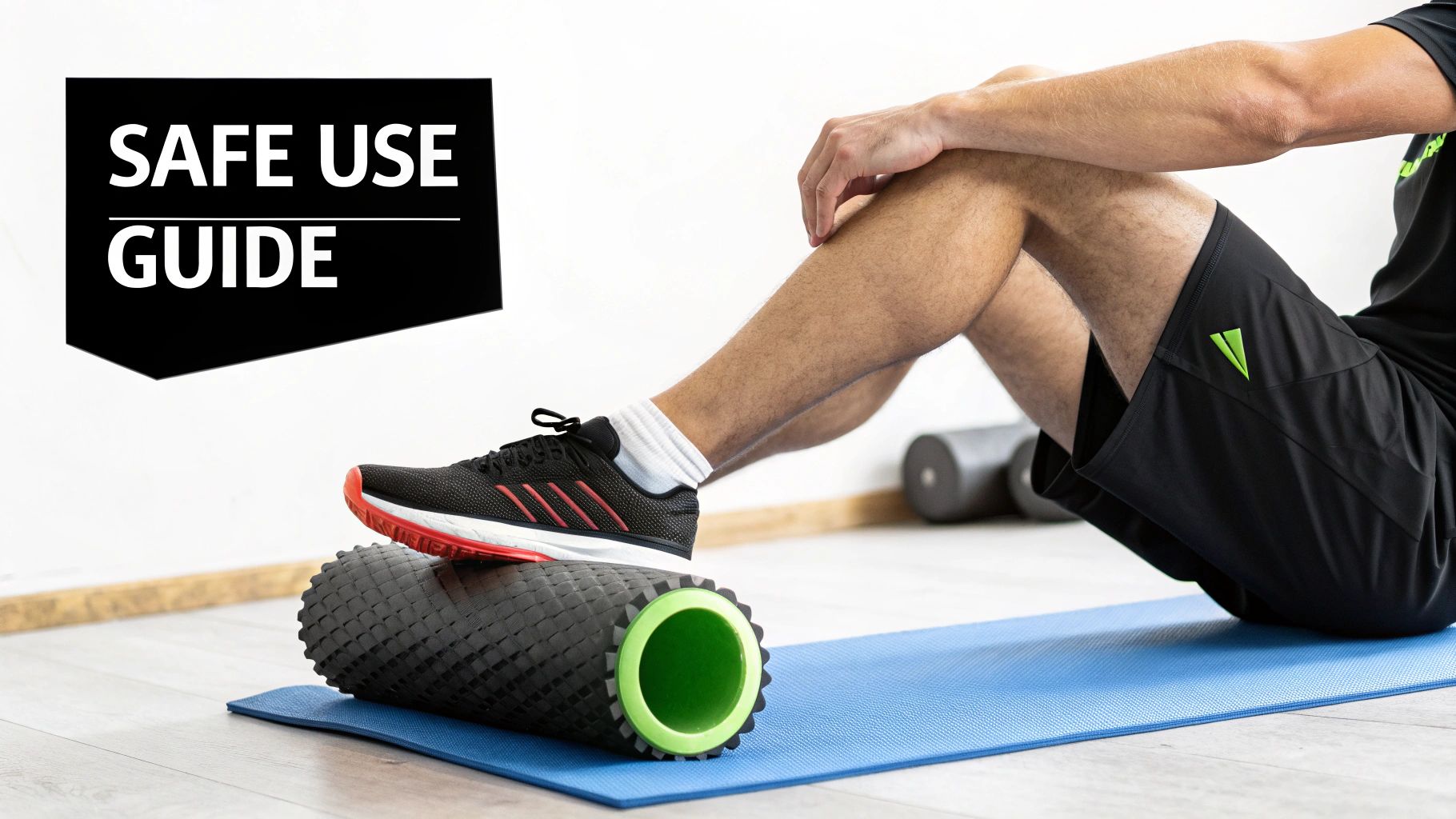
Owning the best workout recovery tools is a great start, but unlocking their real power comes down to knowing how to use them correctly. You wouldn't jump into a heavy lift without knowing the proper form, right? The same logic applies here. Using your gear without the right technique can be a waste of time or, worse, actually set you back.
The goal is always to work with your body, not against it. Each tool has its own rules for getting the most benefit, and a few simple guidelines can turn random guesswork into a precise, targeted strategy. It's about understanding that more pressure isn't always better and that timing is everything.
Mastering Your Massage Gun
A massage gun is a seriously powerful device. Used correctly, it can dissolve knots and prime your muscles for action. But used the wrong way, it can do more harm than good.
The number one rule? Avoid bones, joints, and your neck. Percussive therapy is designed for soft muscle tissue only. Hitting a joint or vertebra with that intense vibration is a recipe for pain and potential injury.
Here’s a quick guide to get it right every time:
- Start Slow: Always begin on the lowest speed setting. This lets you check in with your muscles and see how they respond before you ramp up the intensity.
- Keep it Moving: Never just press the gun into one spot and hold it there. Glide it slowly and smoothly along the length of the muscle.
- Limit Your Time: A little goes a long way. Stick to just one to two minutes on any single muscle group to prevent overstimulation.
Foam Rolling the Right Way
The foam roller is a go-to for a reason, but a lot of people make one key mistake: they roll way too fast. Rushing through it doesn't give the muscle fascia enough time to actually relax and release that built-up tension.
Think of it like gently kneading dough. You need slow, sustained pressure to work out the tough spots. Speeding through it just means you're skimming over the surface without getting deep enough to make a real difference.
To foam roll like a pro, slow everything down. When you hit a tender spot—and you'll know it when you find it—just pause. Hold gentle pressure there for about 20-30 seconds and focus on breathing deeply to help your body relax and let go.
Maintaining Your Equipment for Longevity
Finally, a little bit of care goes a long way in protecting your investment. Your recovery tools are in constant contact with sweat and body oils, so keeping them clean is non-negotiable for both hygiene and durability.
Most tools just need a quick wipe-down with a damp cloth or an antibacterial wipe after you use them. For foam rollers, a simple mix of soap and water does the trick perfectly. It's also a good habit to check your massage gun attachments and compression boot interiors to make sure they're clean and dry before you put them away.
Proper care doesn't just keep your gear hygienic; it ensures it works correctly for years to come. A well-maintained toolkit is always ready to help you bounce back stronger.
Building Your Ultimate Recovery Routine
So, how do you pull all of this together? The best recovery routine is the one you’ll actually stick with. It’s not about having the most expensive or complicated gadgets; it’s about finding the tools you'll use consistently, day in and day out.
Start small. Pick one or two foundational tools that fit your training style. A foam roller for general tightness and a massage gun for those stubborn knots is a fantastic starting point for almost anyone.
From there, focus on building a sustainable habit. Even just 10 minutes of dedicated recovery work after each session can make a world of difference over time. And don't forget the simplest tool of all: hydration. The repair process grinds to a halt without it. Keeping a quality bottle like our FreeSip Insulated Stainless Steel Water Bottle by your side is a non-negotiable part of the equation.
Key Takeaway: Consistency beats intensity every time. A simple, daily recovery practice is far more powerful than an occasional, all-out session.
Ready to train hard and recover even smarter? Visit our store to browse our full collection of recovery tools.
Frequently Asked Questions About Recovery Tools
When you're digging into the world of workout recovery tools, a lot of questions come up. Getting clear, straightforward answers is the key to building a routine that actually works for you and keeps you safe. Let's tackle some of the most common questions so you can use your new gear with confidence.
How Soon Should I Use a Massage Gun After a Workout?
The sweet spot for using a massage gun is within the first hour or two right after your workout. Hitting your muscles during this window helps kickstart the recovery process by immediately boosting blood flow to those tired tissues.
This rush of circulation flushes out the metabolic junk that builds up during exercise and brings in fresh oxygen and nutrients for repair. It's a great way to get ahead of that deep, next-day soreness.
But don't worry if you miss that initial window. You can still get major benefits by using it hours later or even the next day to work out any lingering tightness and knots. Think of it as a tool for both immediate relief and ongoing muscle maintenance.
Is Heat or Ice Better for Muscle Soreness?
This is a classic question, and the answer all comes down to timing. Here’s a simple rule to remember: Ice is for injuries, and heat is for muscles.
Right after a really tough session (within the first 24-48 hours), cold therapy is your best friend. The cold constricts blood vessels, which helps tamp down inflammation and numb the area. It’s perfect for that acute, post-workout soreness or any minor swelling.
Once that initial inflammatory phase has passed, it's time for heat to take over. Applying warmth helps relax stiff muscles, increases circulation to soothe general aches, and just feels good. A day or two after your workout, try a heating pad or a warm bath to ease any remaining tension.
Can You Overdo It with Recovery Tools?
Absolutely. When it comes to recovery, more is definitely not better. It’s easy to get carried away with tools like foam rollers and massage guns, but being too aggressive can actually do more harm than good.
Pushing too hard or spending too much time on one spot can lead to bruising, nerve irritation, or even more inflammation—the very thing you're trying to reduce.
The most important thing is to listen to your body. Recovery should feel relieving, not like a punishment.
- As a general rule, spend no more than one to two minutes on any single muscle group with a massage gun.
- When foam rolling, hold gentle pressure on a tight spot for just 20-30 seconds.
Consistency will always beat intensity. A little bit each day is far more effective than one brutal, painful session.
Ready to build your ultimate recovery toolkit? Cool Brand Designs has curated a collection of top-tier fitness and wellness gear to help you perform at your best. Explore our products and find the perfect tools to support your goals at https://www.coolbranddesigns.com. Don't forget to follow us on our social media channels for daily fitness tips, product demos, and exclusive offers
0 comments